It's a Woman's World: The Unsung Truth of Women's Pain and Healthcare
Written by Samantha Arturo
Edited by Aaryan Pugazendhi
Everybody experiences pain. Yet consistently, women’s pain is devalued and undermined. From early adolescence, women are taught two worldviews as they grow up: they either never want to get their menstrual cycle, or it's the best day on earth. Whether or not a girl is excited for her “period,” one thing remains constant: the second she transitions to “womanhood,” she is classified as dramatic. Now, when she reacts to menstrual cramps, back pain, headaches, and fatigue, she is “overreacting.” Being taught from a young age to disregard pain enables women to be submissive when demanding future care: nearly ⅓ of women have previously avoided or delayed care due to concerns about “not being taken seriously,” while 56% of women have felt they had been dismissed by healthcare providers [1]. Beyond the belittling within the healthcare system that strengthens current systemic disparities, attitudes ingrained in youth normalize these inequalities.
Not only does this undermine female healthcare workers, but female patients are often left to suffer in silence, despite verbalizing their concerns. For example, although 70% of women reported moderate to severe pain during the insertion of intrauterine devices (IUDs), only 30% of physicians offered anesthesia to combat pain. [1]. IUDs, a type of long-acting reversible contraceptive (LARC), are one of the most common and effective contraceptives; hence, more and more women have opted to use them. Yet even as these rates increase, pain management practices for IUD insertion are inconsistent and do not employ the most successful known treatment, paracervical blocks, a common technique used where a local anesthetic is injected around the cervix to reduce pain. Most shockingly, out of 28,727 IUD insertions between 2018 and 2023, only 11.4% of those cases received pain management [2]. Do ineffective and inconsistent pain management standards deter women from accessing safe contraception methods? Further, why do we punish women when we are not actively doing anything to improve their quality of life?
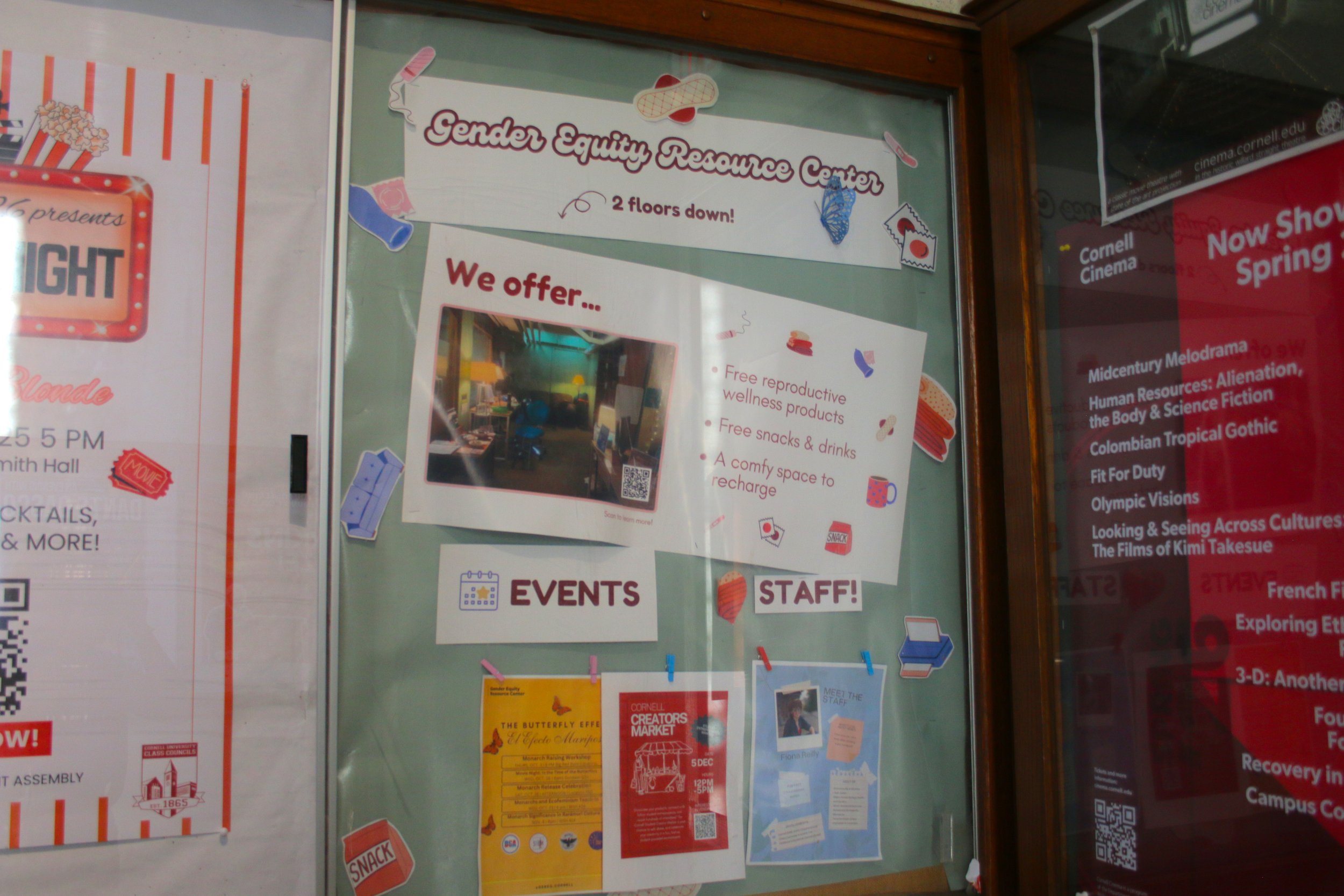
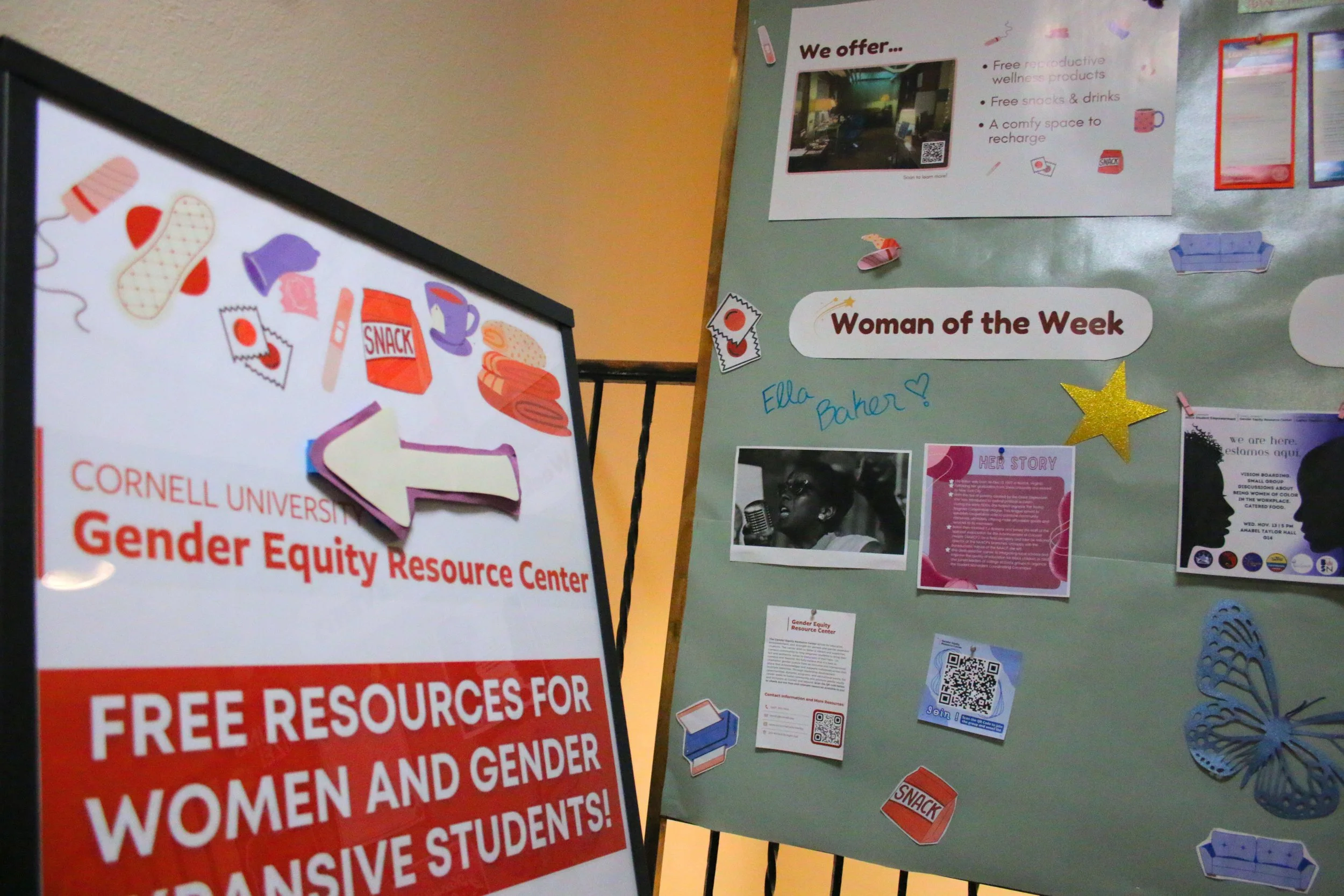
Photos taken at the Gender Equity Resource Center at Cornell University. Taken by EllaRose Sherman (eks92@cornell.edu).
Not only do women physically experience biases in health centers, but medical research often alienates women from seeking help for themselves. Notably, although clinical trials have required women participants since 1993, independent drug manufacturers currently do not have to test for gender specific markers [3]. You may be wondering why this matters, but without accounting for different hormone (i.e., estrogen and progesterone) levels and biological markers in women, research can subsequently harm women users in ways that are omitted from packaging. For example, sleep regulators like Ambien have a typical ten milligram dosage, but the FDA recommends that women take five milligram doses, because women metabolize the drug more slowly than men [4]. While Ambien can impair women longer than men, more alarmingly, even common medications, like acetaminophen (i.e., Tylenol), can have heightened effects on women’s livers. Therefore, even if women succeed in finding pain relief mechanisms or medications to aid their ailments, unreported and hidden information in labels can end up hurting them more.
Even as women are experiencing increasing chronic and short-term pain, they are treated with less respect and visibility, and instead of medicine adapting to account for and correct its errors and biases, women are forced to accept these standards. Women may have each other to lean on, but it will take a lot more change from the healthcare system to satisfy the intrinsic rights and needs of all individuals.
Samantha Arturo '29 is a Biological Sciences major in the College of Arts & Sciences. She can be reached at sma298@cornell.edu.
Sources: