Sustainable Space Exploration: Recycling Beyond Earth
Written by Gosephine Lizzi
Edited by Terrance Miao
As children, the phrase “reduce, reuse, recycle” is accentuated, often appearing in classrooms, posters, and public campaigns. Yet it has become more of a cliché, often ignored as less than 10% of plastics are actually recycled globally. However, as humanity expands beyond Earth, this principle is no longer optional. In space, sustainability is a necessity, not just an environmental ideal.
Orbiting our planet today are hundreds of millions of particles of space debris. This space trash has the potential to not only damage spacecraft, but it also threatens long-term access to space and could eventually obscure our view of the night sky. Some debris even has the potential to release harmful chemicals into the upper levels of Earth’s atmosphere.
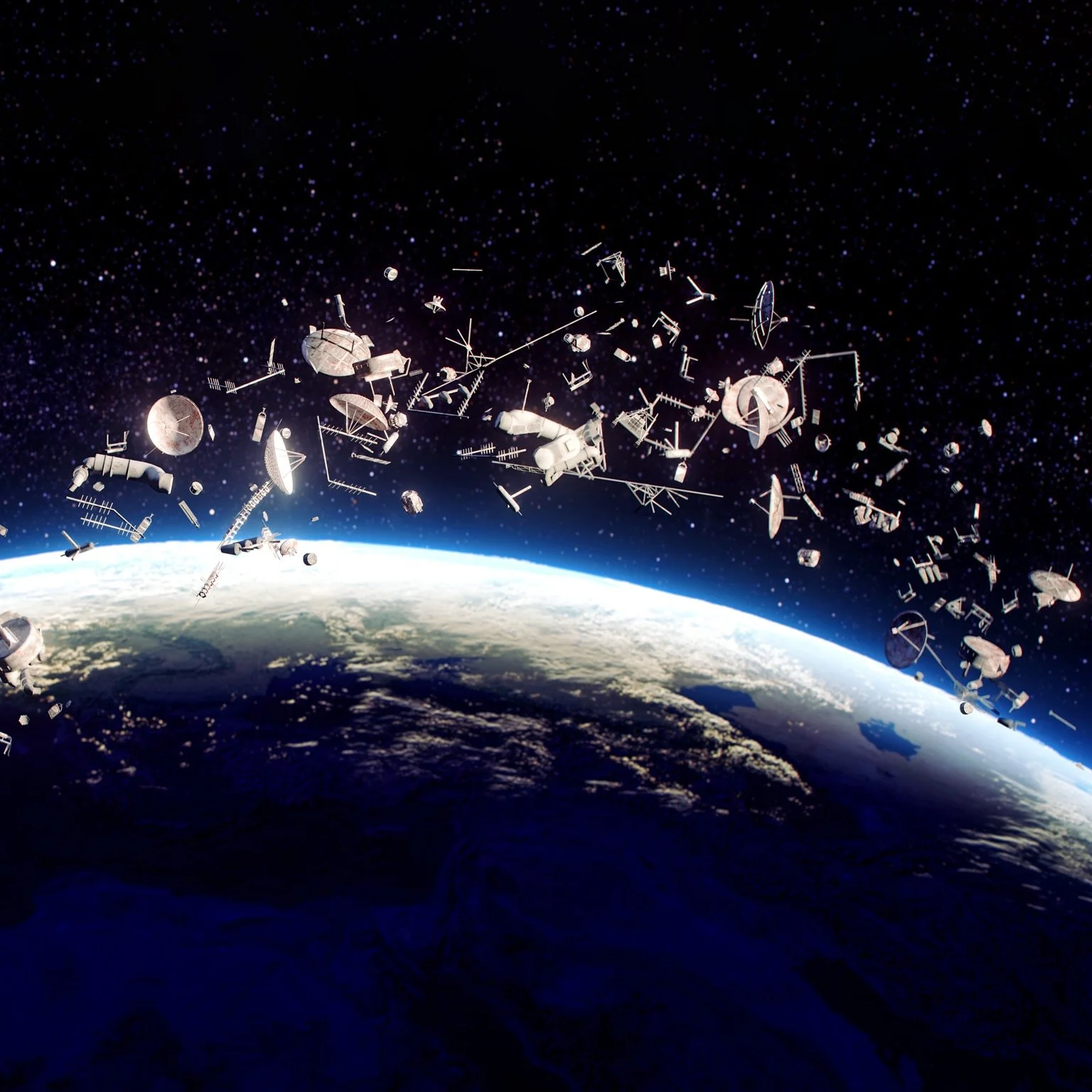
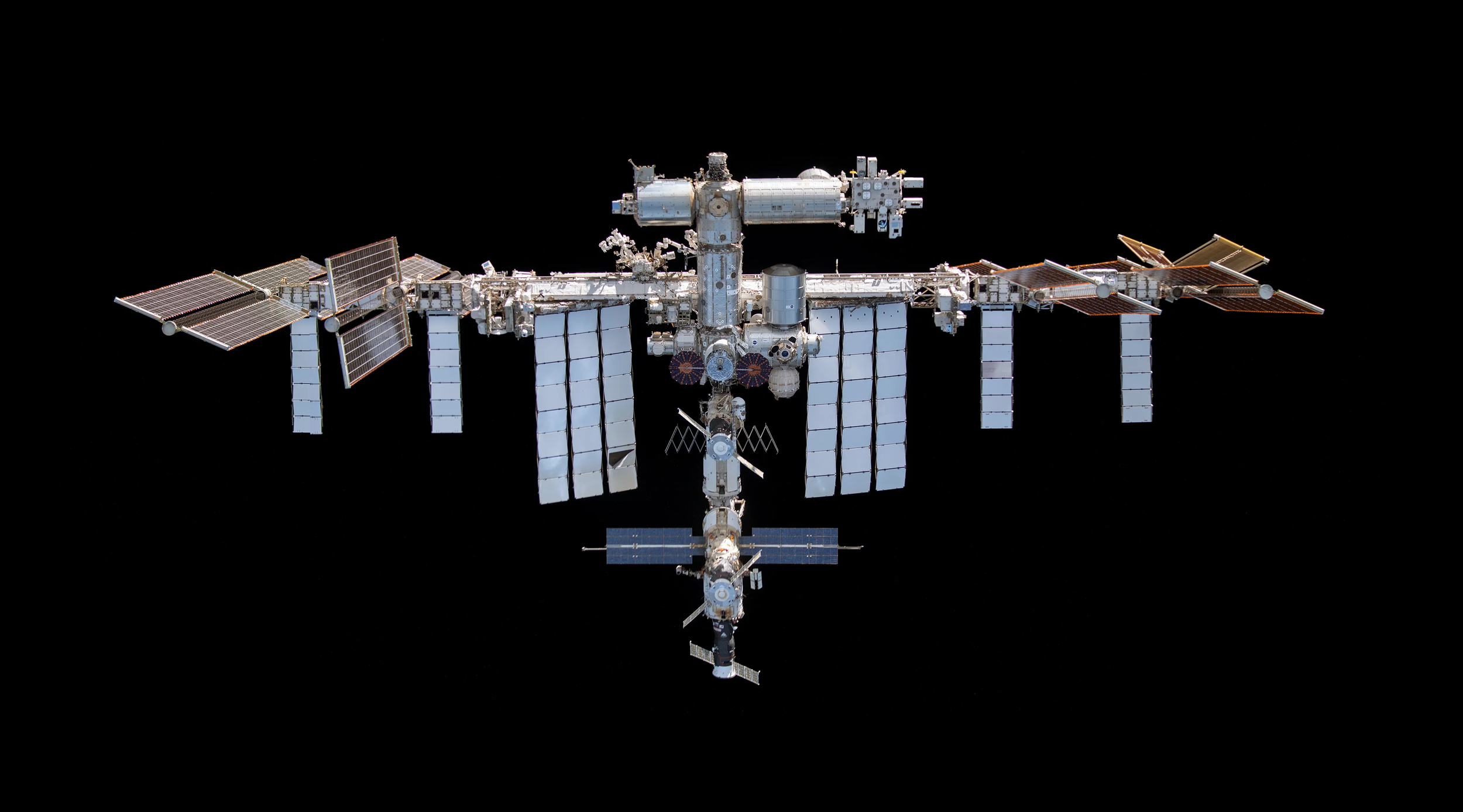
Photos of Space Debris (left) and the International Space Station (right) from McKinsey & Company (left) and NASA (right). Curated by Camille Parisot (cap364@cornell.edu).
Recycling this trash becomes even more convoluted in microgravity environments like the International Space Station. On Earth, waste can be transported, buried, or processed through large-scale systems, but space missions operate under strict payload limits, meaning mass, volume, and energy must be maintained. Thus space habitats must act as circular economies, where materials are continuously reused rather than discarded.
With ambitious plans to construct colonies on the Moon and Mars, the need for sustainable waste management increases. Furthermore, waste in space doesn't degrade the same way it does on Earth. In the extreme vacuum environment of low-Earth orbit, waste is exposed to intensive UV radiation but lacks the atmospheric gases and microbial activity that drive decomposition on Earth. Without these processes, many materials, like plastics, would remain intact for much longer than they would on Earth.
Current methods for managing space waste are limited. Some debris is burnt up in our atmosphere, while other materials may be returned to Earth for disposal. Both approaches are either expensive, require a lot of energy, or aren't entirely efficient. However, researchers are exploring an innovative and biologically driven solution using plastic-eating microbes.
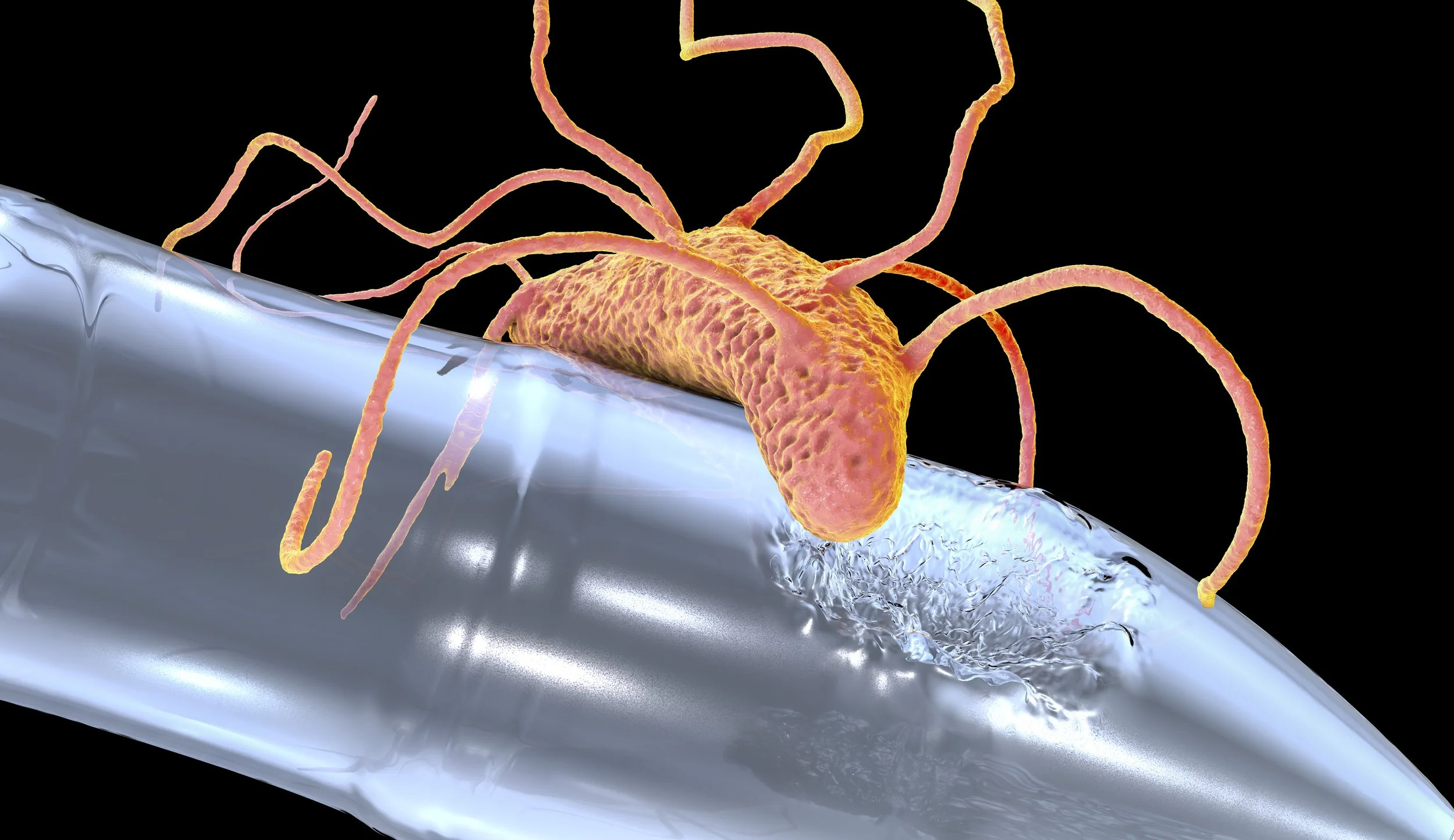
Photo of plastic-eating bacteria from Live Science. Curated by Camille Parisot (cap364@cornell.edu).
Many microorganisms have been found to have a gene that allows them to break down plastics using specialized enzymes. One of the most well-known is a bacterium called Ideonella Sakaiensis, which specifically degrades polyethylene terephthalate (PET), often found in packaging and textiles. It uses enzymes called PETase and MHETase to eat away at plastic particles. Microbial recycling systems would occupy far less space than traditional waste management infrastructure and have the potential to significantly reduce waste.
At Cornell, scientists in the Santomartino research group are actively investigating how microgravity environments affect microbial behavior, including gene expression and enzymatic activity. These conditions could alter the efficiency of microbial plastic degradation. While this technique is relatively new, microbial recycling is a promising approach to building a circular economy in space and supporting sustainable space exploration.
Gosephine Lizzi ‘28 is in the College of Arts & Sciences. She can be reached at gl538@cornell.edu.