Subterranean Sustainability: The Sunken Courtyard Houses of China
Written by Katherine Zhao
Edited by Gabriel Martinez-Amezaga
If you scroll for a bit on Google Earth and come across the edge of the Henan province of Northern China, you’ll notice a rather peculiar sight: a group of square-shaped voids carved into the earth teetering at the edge of a cliff face. Although appearing to simply be modest earthen dwellings, these surviving pieces of ancient Chinese architecture can provide us with invaluable insights regarding sustainable design and possible solutions to our climate crisis.
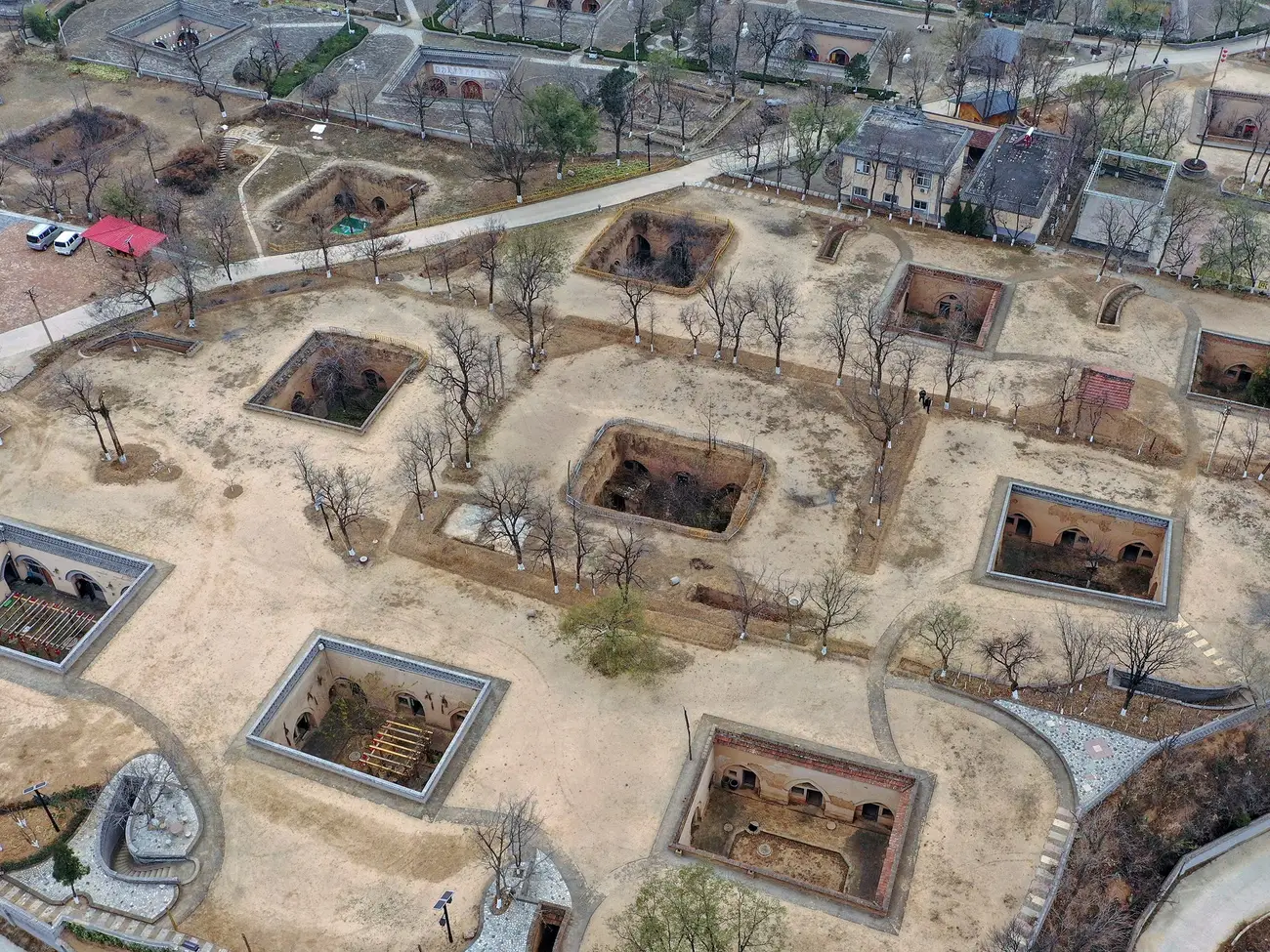
Photo from Business Insider. Curated by Madelyn Rhodes (mgr84@cornell.edu).
Situated on the Loess Plateau, directly adjacent to modern storage facilities and buildings in the city of Sanmenxia, these openings are one of the earliest forms of domestic architecture known as yaodong, or sunken courtyard houses. Each house is composed of a central courtyard set 25 to 30 feet beneath ground level and enclosed by four walls (1). Placed on each of these walls are two or three arched facades leading to tunnels known as caves that serve as bedrooms, kitchens, and storage units (2). Each house is made accessible by an L-shaped staircase with an entrance at the ground level that connects to one of the tunnels (1).
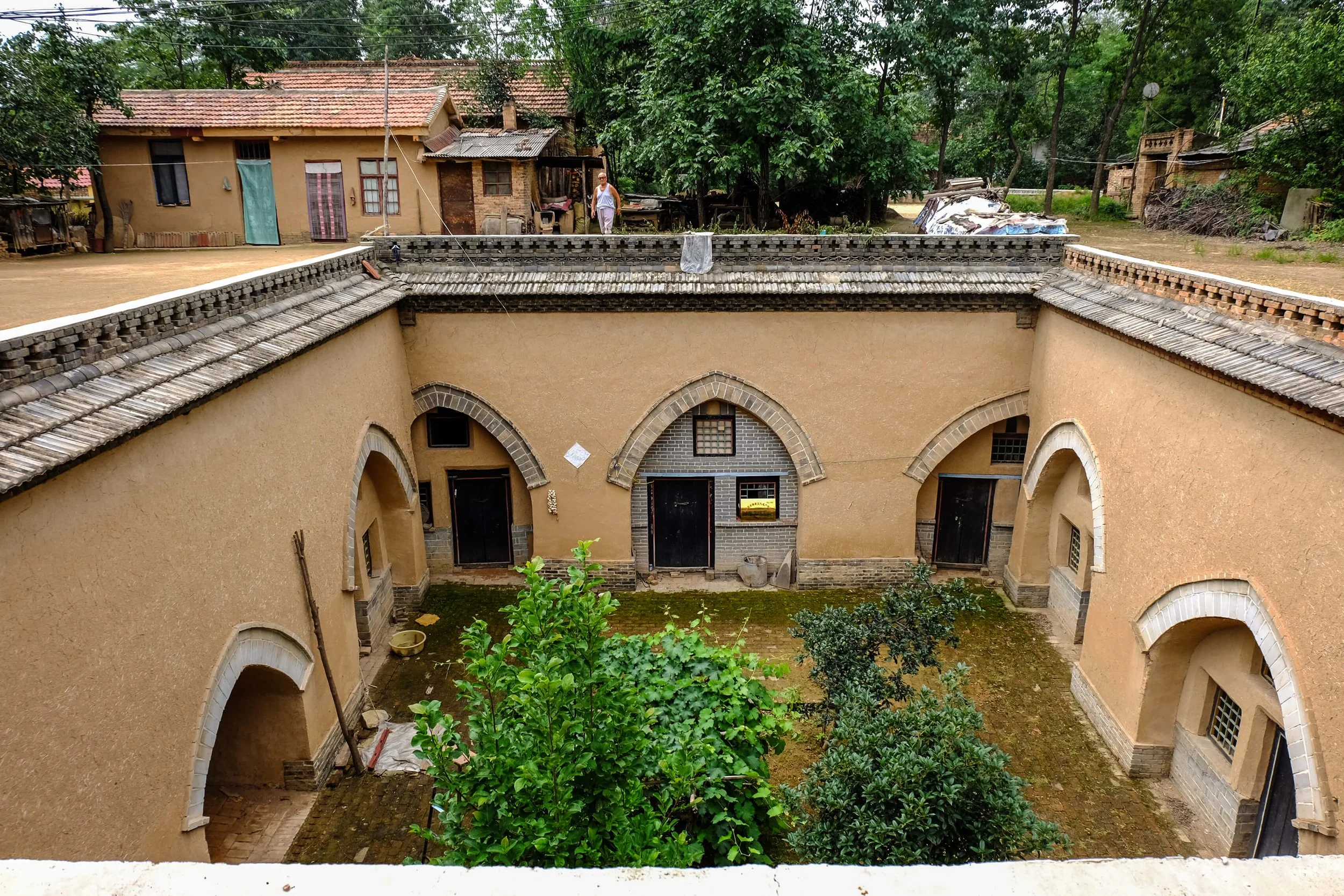
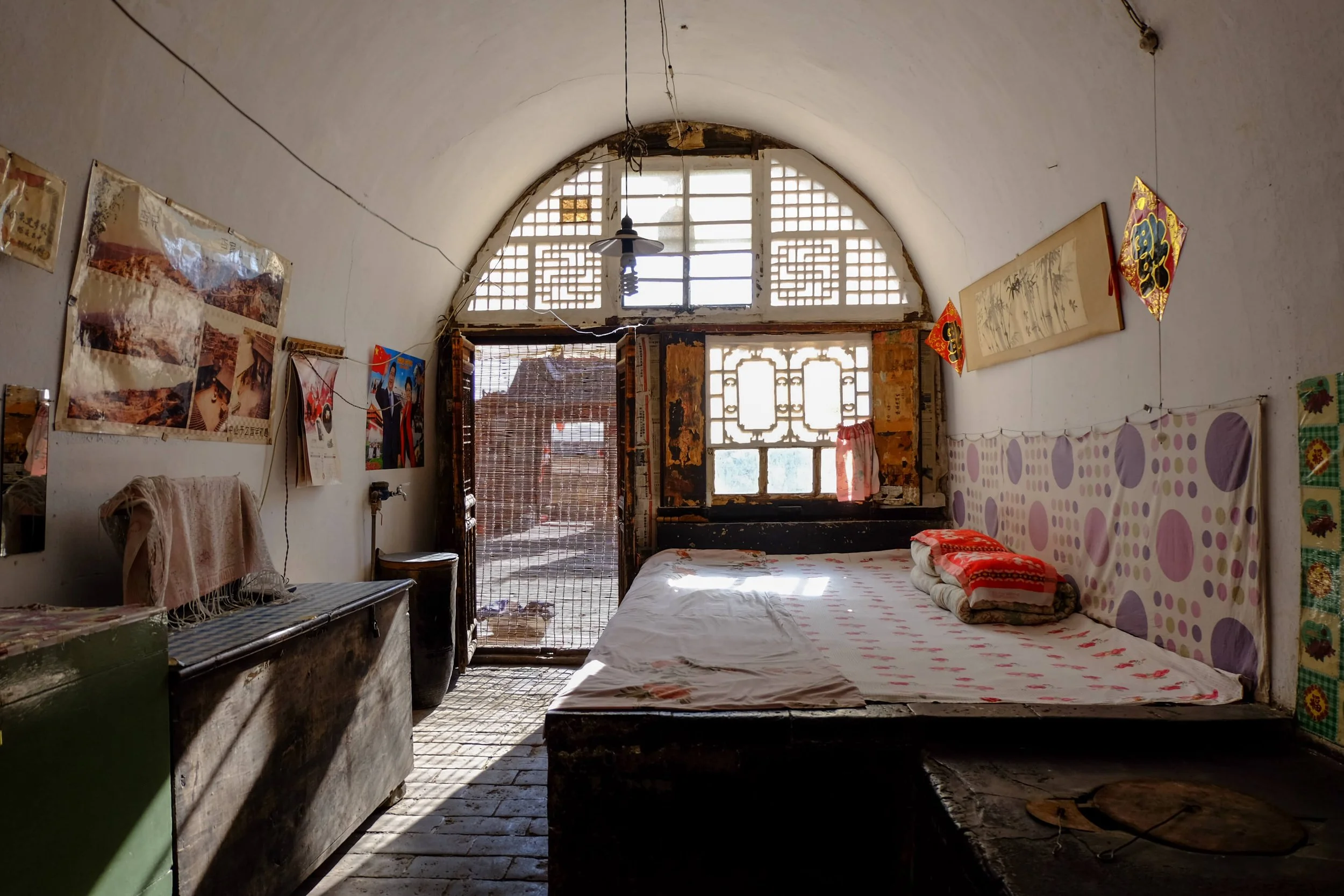
Photo of exterior (left) and interior (right) of Yaodong House from Architecture on the Road. Curated by Madelyn Rhodes (mgr84@cornell.edu).
Although this subterranean building technique dates back to at least the Qin Dynasty (around 230 BC), around 40 million people live in such residences today (3), with many rural families constructing their own modern sunken courtyard houses (4).
The operation of constructing such sunken dwellings seems to directly challenge the widely-accepted notion that architecture—residences, office buildings, public spaces—should be built above-ground. However, the unique design of the sunken courtyard house does not inhibit residents’ ability to engage in cultural and communal activities. In fact, since the construction methods primarily require local materials, ordinary villagers traditionally build homes by hand alongside other family members and neighbors. Additionally, since the only source of natural light comes from the windows on the facades facing the courtyards, family members residing in a yaodong are naturally drawn to the courtyard as the heart of familial gathering (2), which can be furnished with small gardens and strung with lanterns during holidays such as Lunar New Year.
With questions of sustainability reaching the forefront of the design industry’s consciousness, architectural footprints of the ancient world may yield solutions to modern problems. The yaodong houses serve as excellent examples of sourcing building materials locally to reduce the carbon footprint of transporting imported material. Loess, a sediment formed during the Pleistocene epoch in China, consists of calcareous concretions (CaCO3 aggregates) that form ginger nuts in the Sanmenxia loess. The carbonization of calcium carbonate produces bicarbonate, which reacts with the colloids of the clay in the soil to raise the viscosity of the loess. Combined with other carbonates and sulfates cementing with the loess particles, the body of the loess soil performs similarly to a brick supporting structure. Such remarkable compressive strength has allowed the loess soil to support the yaodong houses for centuries. Furthermore, to protect the courtyard’s walls from wind and water erosion, villagers would strengthen the bottom of the arched facades with adobe bricks and cover them with a mixture of mud and straw in addition to lime mortar. (2) This reliance on regional building materials and traditional construction techniques ensures that the yaodong houses emit a relatively small amount of CO2 in comparison to modern residences (5).
Not only is the construction process behind building a sunken courtyard house exceptionally energy efficient and sustainable, but the dwellings themselves create a comfortable internal ambiance. The Henan province is defined by hot summers and cold winters, and is classified as a dry environment with modest rainfall. As such, the sunken courtyard house aims to create a thermal environment that provides warmth in winter and cooling in summer. In the wintertime, the earth-sheltered roof and insulated exterior walls allow for a greater degree of thermal comfort (6) while during the summer, the apertures—usually two windows per facade—allow for natural ventilation, thus reducing interior mean radiant temperature when combined with the fact that the caves are shielded from direct solar radiation (7). The sunken nature of the exposed courtyard allows outdoor activities to be conducted even in winter, as the loess walls shield it from the direct effect of cold winds (6). Some sunken court houses also have heated platform (kang) beds in their caves: a brick platform below a mattress is heated by a stove in an adjacent tunnel connected to it via a duct (8).
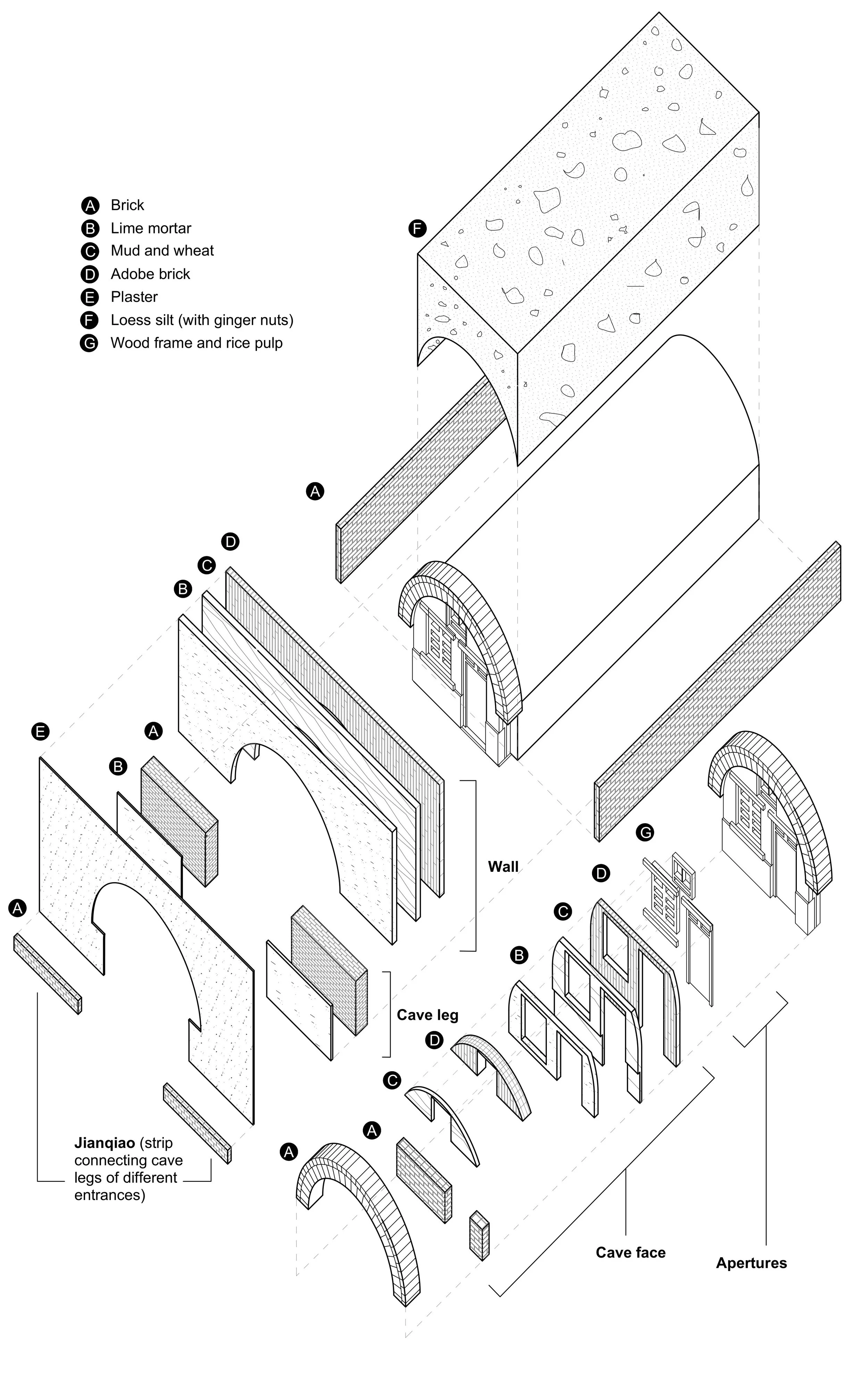
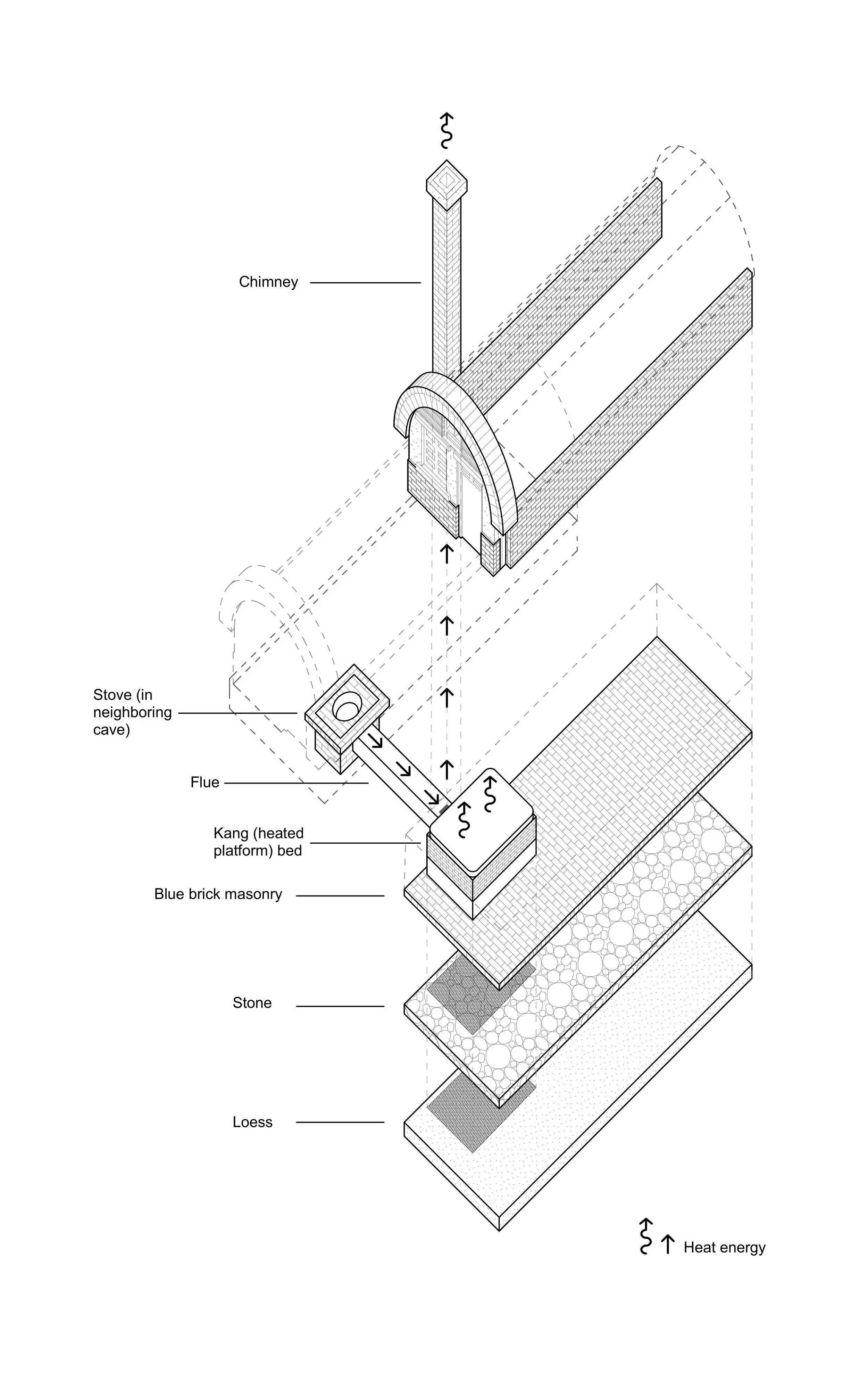
Exploded axonometric diagrams representing materiality/construction of yaodong houses. Created by Katherine Zhao (kyz6@cornell.edu).
The construction of the yaodong houses serves as testament to the simplicity of achieving architectural sustainability. The structure’s thermal regulation is a direct result of its subterranean advantage: being embedded in the earth provides a natural source of insulation and shielding from the elements, thus mitigating energy consumption from appliances such as air conditioning and furnaces.
Of course, it would be unrealistic to expect architects and urban planners to immediately switch over to developing cities completely underground. Nevertheless, those in charge of our world’s future can take note of the effectiveness of utilizing regionally-harvested materials and a site’s preexisting conditions to create natural temperature regulation. Sustainable architecture, by definition, seeks to create an advanced and productive future while minimizing humanity’s impact on our Earth: instead of spending time and investing limited resources into creating a new solution to our climate crisis, perhaps we should recognize that the most effective solutions may have already been discovered and implemented in the past.
Katherine Zhao ‘30 is in the College of Architecture, Art and Planning, studying Architecture. She can be reached at kyz6@cornell.edu.
Sources:
Rudofsky, Bernard. Architecture Without Architects: An Introduction to Nonpedigreed Architecture. Doubleday Books, 1964.
Gao, J. “SUNKEN CAVE DWELLINGS – SEEN FROM TYPOLOGICAL &Amp; ANTHROPOLOGICAL PERSPECTIVES.” the International Archives of the Photogrammetry, Remote Sensing and Spatial Information Sciences/International Archives of the Photogrammetry, Remote Sensing and Spatial Information Sciences XLVI-M-1–2021 (August 28, 2021): 241–48. https://doi.org/10.5194/isprs-archives-xlvi-m-1-2021-241-2021.
Liu, Jiaping, and Liu Yang. "Thermal design of a zero energy cave-dwelling solar house." Acta Energiae Solaris Sinica 20, no. 3 (1999): 302-310.
World Habitat. “The New Generation of Yaodong Cave Dwellings, Loess Plateau - World Habitat,” September 8, 2025. https://world-habitat.org/awards/winners/the-new-generation-of-yaodong-cave-dwellings-loess-plateau/.
Zhu, Xinrong, Jiaping Liu, Liu Yang, and Rongrong Hu. “Energy Performance of a New Yaodong Dwelling, in the Loess Plateau of China.” Energy and Buildings 70 (November 22, 2013): 159–66. https://doi.org/10.1016/j.enbuild.2013.11.050.
En Li et al. “Climate-responsive Strategies in Sunken Courtyard Cave Dwellings: Architectural Insights for Modern Passive Design.” Journal of Asian Architecture and Building Engineering, March 7, 2025, 1–26. https://doi.org/10.1080/13467581.2025.2474823.
Liu, Jiaping, Lijuan Wang, Yasuko Yoshino, and Yanfeng Liu. “The Thermal Mechanism of Warm in Winter and Cool in Summer in China Traditional Vernacular Dwellings.” Building and Environment 46, no. 8 (February 26, 2011): 1709–15. https://doi.org/10.1016/j.buildenv.2011.02.012.
Chinese Climate and Vernacular Dwellings - Scientific Figure on ResearchGate. Available from: https://www.researchgate.net/figure/Cave-dwelling-elevation-and-section_fig12_269966756 [accessed 14 Feb 2026]