What Bees Reveal About Intelligence
Written by Rena Georgakopoulos-Ueta
Edited by Renee Lee
In the past, it was believed there was a single neuron that led all decision making in the brain. In the modern-day neuroscientific and cognitive scientific fields, however, it is generally accepted that intelligence is a complex emergent property that arises from the interactions of neurons. An understanding of the microscopic behavior of the neurons themselves is not enough to understand the behavior of the brain as a conscious entity. It is the same with other complex entities, like a society, which can be composed of thousands to millions of individuals, each with their own unique identity, but whose sum produces a complex body that does not resemble the properties of its constituents at all.
When we imagine a beehive, one of the first descriptive words that comes to mind is “monarchy”. A central queen directs all her subjects—automaton robots that live by their hierarchical designations: scout, forager, and mater. This has been the consensus among people for thousands of years and has been interpreted as a form of the political systems that were rooted in societies for much of human history. Yet modern research suggests quite contrarily that there is no true ruler, and that hive behavior is, just as the brain, an incalculable emergent property of thousands of little interactions.
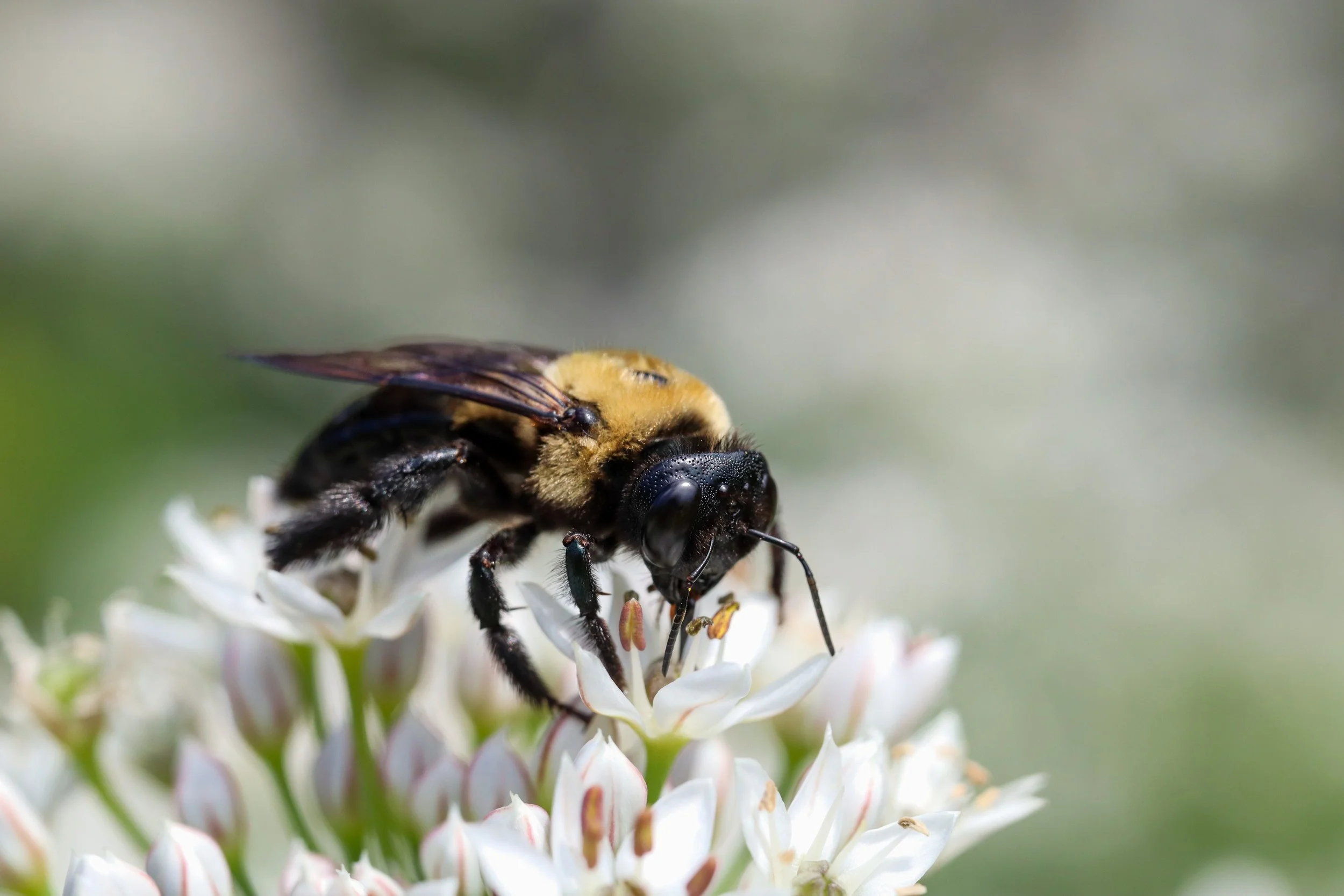
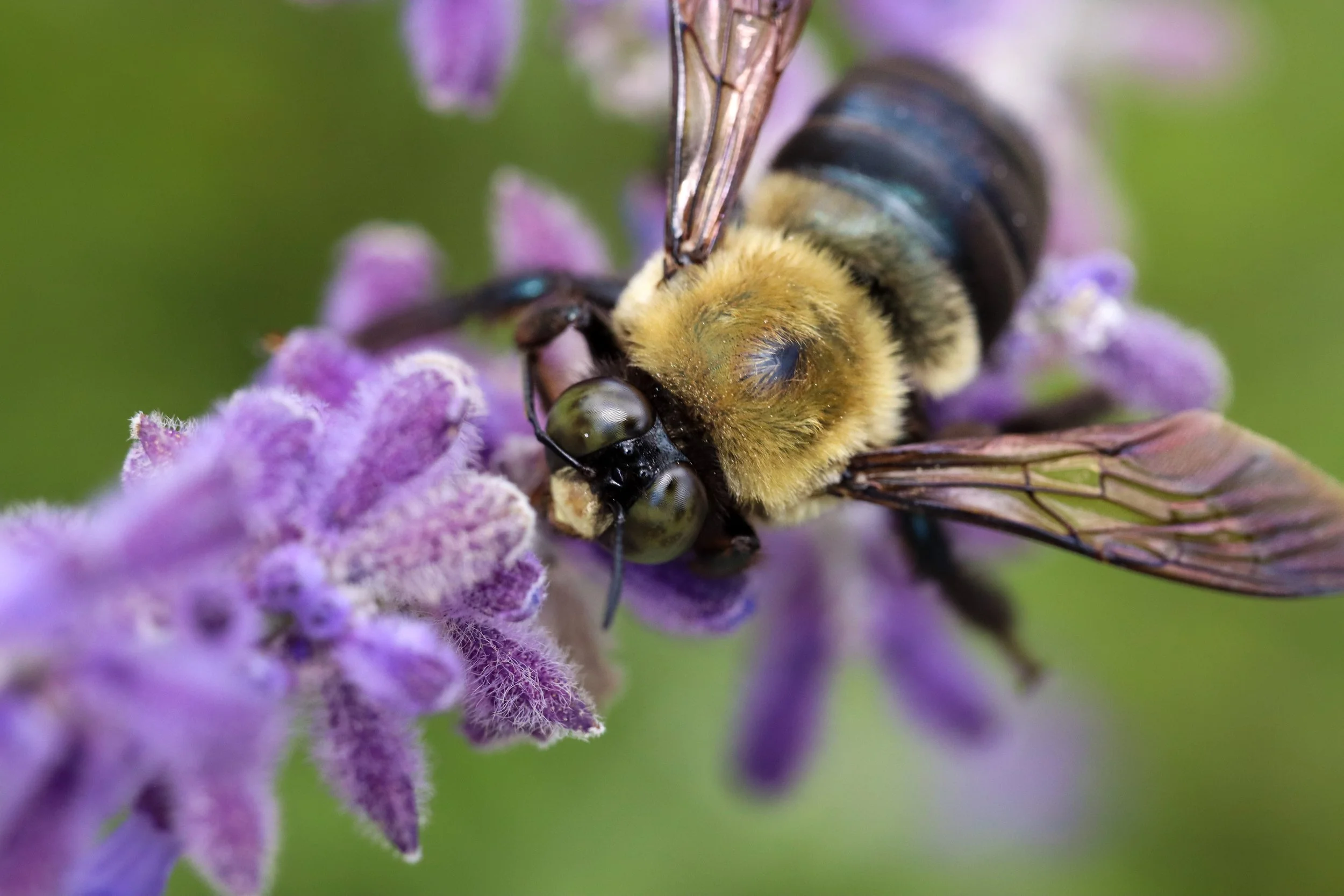
Photos taken by Julia Leavitt (jal569@cornell.edu).
These previous assumptions of bees began to be challenged in the early 20th century, when Karl von Frisch discovered the dancing behavior of bees. As beekeepers have been familiar for centuries, when bees plan to relocate after the maturation of their queen, they must find a new location at which to build a nest. This involves a swarm that departs from the original nest, surrounding the queen. Certain scouts leave the swarm to look for suitable locations, usually within 10 km. Observing bee behavior at the Munich Zoological Institute, Frisch discovered that foraging bees carry out performances in figure eights upon return to their honeycomb. If the scouts found worthwhile locations, they would perform a kind of wagging dance. They would orient themselves at an angle relative to gravity and the sun that would indicate the direction of the nectar source. Variations in length, speed, and intensity of their dances provided information regarding the distance and quality of the nectar source.
Frisch was insistent on calling the behavior of bees a language, as it was composed of complex interactions to communicate abstract ideas. Yet his findings were not well received, with many scientists rejecting the idea that an individual insect could relay such complicated information. However, Frisch’s experiments, including training bees to visit hidden food sources miles away, demonstrated that recruits could fly directly to locations indicated only through dance. Bees, it seemed, were not all that mindless, but rather processing beings with memory, learning, and independent decision making.
Still, communication alone does not explain governance. Thomas Seeley, the Horace White Professor at Cornell University, investigated the mechanisms behind the migration of a swarm. In his observations, he noticed how after a swarm leaves the original nest, only a select few of the thousands of bees leave the swarm to search the surroundings for a suitable home.
Other scouts follow these dances, inspect sites, and, if persuaded, dance for the same location. Poorer sites gradually lose support as their dances weaken and cease. Scouts also relay vibrational “stop signals” to bees promoting competing locations. A long process of communication and debate thus takes place. When at last a quorum, or a critical number of scouts dancing in a particular manner that indicates a particular potential home, has accumulated, the swarm immediately takes flight to translocate.
No bee presides over this process; there is no overseer comparing options, no monarch making final decisions. Instead, the combination of individual social interactions determines the result. Positive feedback, resulting from the encouragement of dancing bees, amplifies the favor for seemingly promising options, inhibitory signals suppress weaker ones as “waggers” silence their competitors, and a threshold triggers immediate collective action.
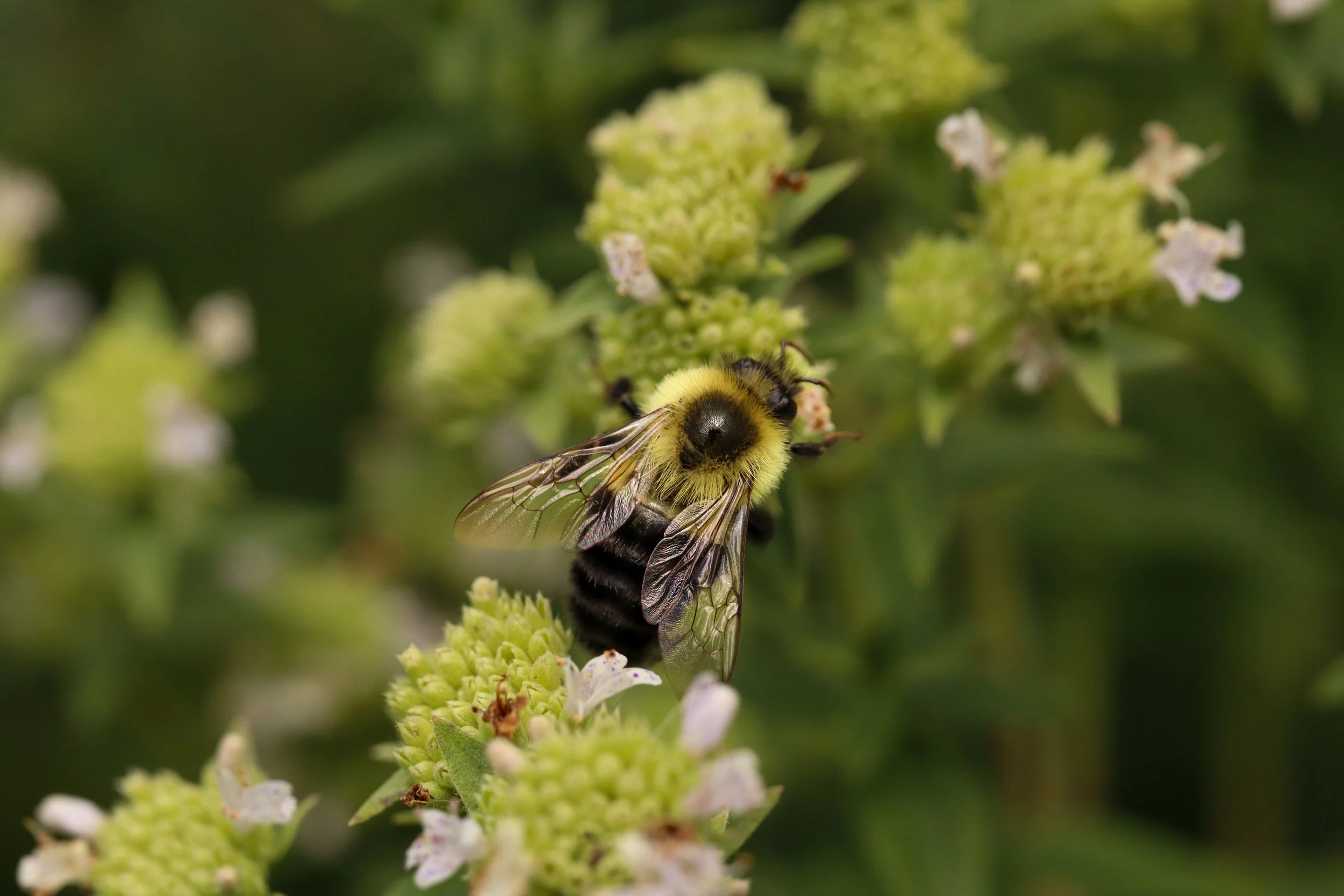
Photos taken by Julia Leavitt (jal569@cornell.edu).
The parallels between the brain and the behavior of hives are quite compelling. In the brain, excitatory neurons reinforce one potential action while inhibitory neurons mitigate others. Once a threshold has been crossed, a decision is made. In the swarm, dances function as excitation, stop signals as inhibition, and quorum as the threshold. Hives thus function less as monarchical systems but as brains.
Perhaps out of intuition, we’ve projected for centuries our idea of society as a monarchical system to understand complex systems, from the brain to the beehive. However, such systems are complicated precisely because they are not determined by a centralization. Developments in the neuroscientific and entomology fields show how decision does not descend from above, but rather accumulates from below, as local interactions yield greater collective actions. As Seeley writes, “A colony of honey bees is far more than an aggregation of individuals; it is a composite being that functions as an integrated whole.”
I think that the most unsettling thought, though, from this hive deep-dive is not about bees at all; if decision making can arise without a central controller, then intelligence must be a function of network interactions rather than be the property of any single entity. If billions of distributed interactions are what yield coherence, to what degree are we as humans the cohesive, singular “selves” that we believe ourselves to be?
Rena Georgakopoulos-Ueta ‘29 is in the College of Arts and Sciences. She can be reached at rig36@cornell.edu.