What Research Says About Tear Gas, and What it Doesn’t
Written by Sophia Gerrans
Edited by Marc Staiano
On January 31, 2026, thousands gathered to protest along the perimeter of Portland, Oregon’s Immigration and Customs Enforcement (ICE) building, many holding signs such as “ICE Out of Our Communities.” But what began as a peaceful daytime demonstration quickly deteriorated as federal agents deployed gas canisters from the roof, later alleging some protesters had crossed property lines. Tear gas drifted across several neighboring blocks, affecting demonstrators, including numerous families, with one video showing a young girl in clear distress as volunteer medics sprayed water into her eyes to clear the gas.
In the US, law enforcement officers are trained to use force as a last resort when a crowd poses an imminent threat. Despite this, at least four major cities, including Portland, have reported an uptick in tear gas being used as crowd control amid domestic discontent, largely during immigration protests. In Chicago alone, federal agents have used chemical weapons on protesters at least 49 times since October 2025, with at least 30 of those incidents occurring after a judge placed restrictions on agents’ use of tear gas.
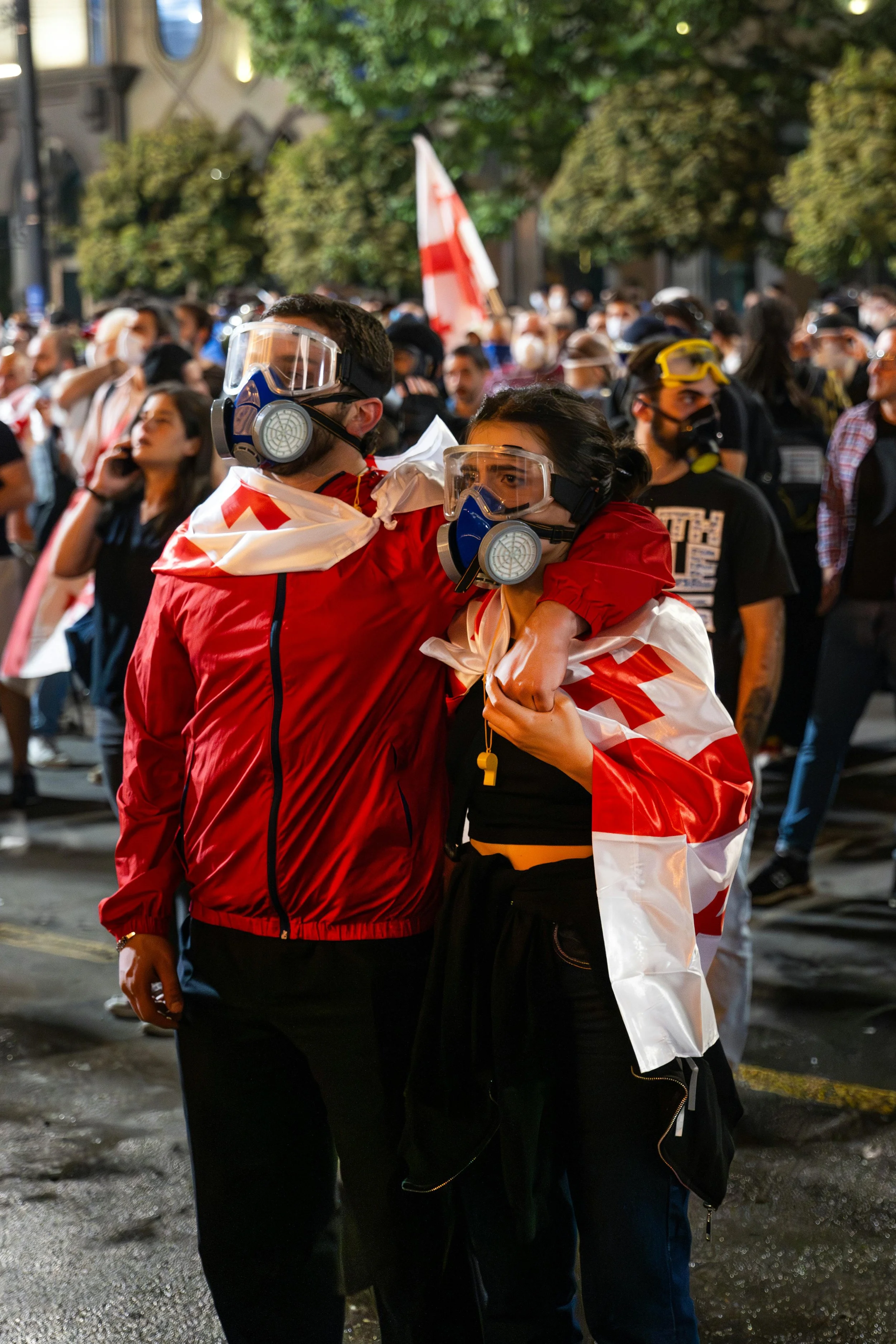
Photo by Ramaz Bluashvili via Pexels. Curated by Julia Leavitt (jal569@cornell.edu).
But “tear gas” is a catch-all term and, despite its name, not a gas at all. The weapon is a dispersed aerosol containing chemical irritants that affects the eyes, skin, and respiratory system within seconds of exposure. In its early form as chloroacetophenone, it debuted on World War I battlefields alongside mustard gas; after the war, police forces adopted it domestically to suppress labor unrest during post-war labor instability.
In 1993, tear gas was outlawed as a method of warfare under the Chemical Weapons Convention, agreed upon by nearly 200 countries. Yet those same chemical agents were explicitly permitted leeway for domestic law enforcement, a bypass that continues to dictate American policing.
Today, the most common form of tear gas for domestic policing is chlorobenzylidenamolonitrile (CS). These airborne particles will adhere to any wet surface, which is especially prolific in the mucous membranes of sensitive body systems. They bind to the same pain receptors as capsaicin, the active compound in chili peppers that produces their burning sensation, but act much more potently, immediately triggering cascades of pain signals to the brain. They notably stimulate the lacrimal gland nerves in the eyes, producing the namesake tears.
The short-term consequences of tear gas exposure are evident through coughing, nausea, blurred vision, and skin rashes, but what’s less clear are the long-term effects. The CDC reports that long-term exposure may result in chronic bronchitis, decreased lung function, and permanent eye damage, including glaucoma and blindness. However, a 2016 review from the New York Academy of Sciences reveals that there is a lack of substantial data available on how tear gas is affecting human health. Additionally, the review points out that most existing research on tear gas is based on controlled exposure to animals or healthy male volunteers, which consequently excludes its effects on children, women, the elderly, and those with existing conditions.
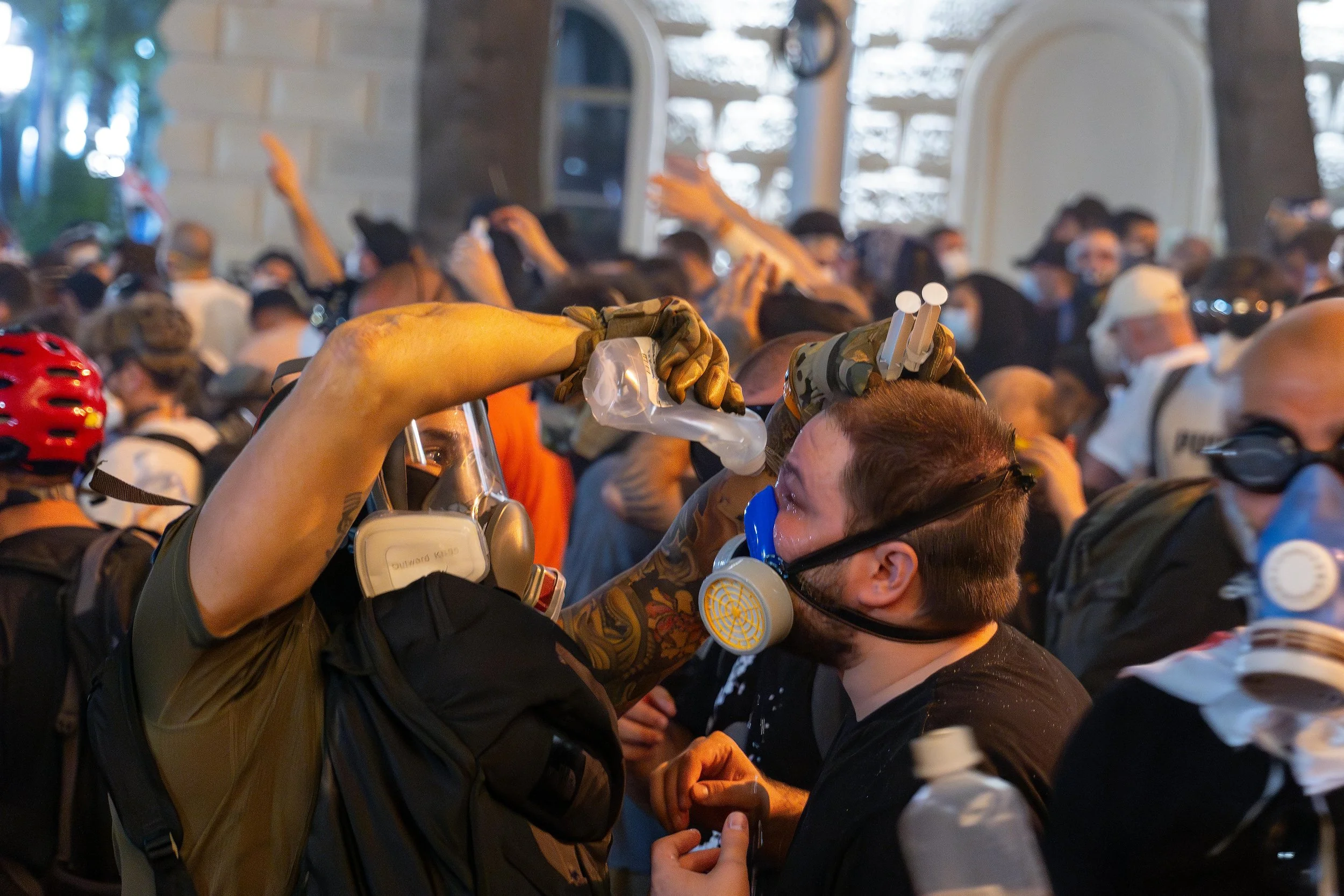
Photo by Ramaz Bluashvili on Pexels. Curated by Julia Leavitt (jal569@cornell.edu).
A decade later, many research gaps persist. In 2023, the University of Minnesota found that up to 83% of menstruating individuals exposed to tear gas experienced adverse reproductive outcomes, especially relating to the menstrual cycle. These findings were not only striking but also the first research about sex-specific impacts, highlighting just how much is unknown about the full bodily effects of tear gas.
Creating more uncertainty is the absence of comprehensive public monitoring. There is no standard to track when tear gas is employed, in what quantities, or how close civilians are to its release. Critical details like proximity of impact, length of exposure, and effects on vulnerable groups remain unknown. As environmental justice scholar Julie A. Gonzalez warns, “This gap makes it difficult for the public, for researchers, and for policy makers to quantify the exact impact of identifying these toxic air pollutants across states.”
Tear gas is hailed as a “less-lethal” method of crowd control, but that designation is based on incomplete data. When the very same chemical element banned on the battlefield becomes the designated strategy on residential city blocks, uncertainty morphs into real harm—a burden that falls on the public, not the institutions that deploy it.
Sophia Gerrans ’27 is in the College of Agriculture and Life Sciences. She can be reached at sg2388@cornell.edu.