Written by: Heidi Yoo
Edited by: Raghav Tewari
The Cornell physics department’s research page appears at first glance to be a plasma soup of acronyms, but a closer look reveals an octet of major experimental facilities. The Cornell Laboratory of Atomic and Solid State Physics (LASSP), the Cornell Electron Storage Ring (CESR), the Cornell High Energy Synchrotron Source (CHESS), the Cornell Laboratory for Accelerator-based Sciences and Education (CLASSE), the Cornell Center for Materials Research (CCMR), the Nanobiotechnology Center (NBTC), the Cornell NanoScale Science & Technology Facility (CNF), the Cornell University Center for Advanced Computing (CAC), and finally the Kavli Institute at Cornell for Nanoscale Science (KIC) [1] all bolster different pillars of experimental physics research at our university. Together, they span multiple disciplines, pulling from various branches of chemistry and biology as well as forming strong ties to fields of engineering.
Photographs by Rebecca Lee. She can be reached at rl898@cornell.edu
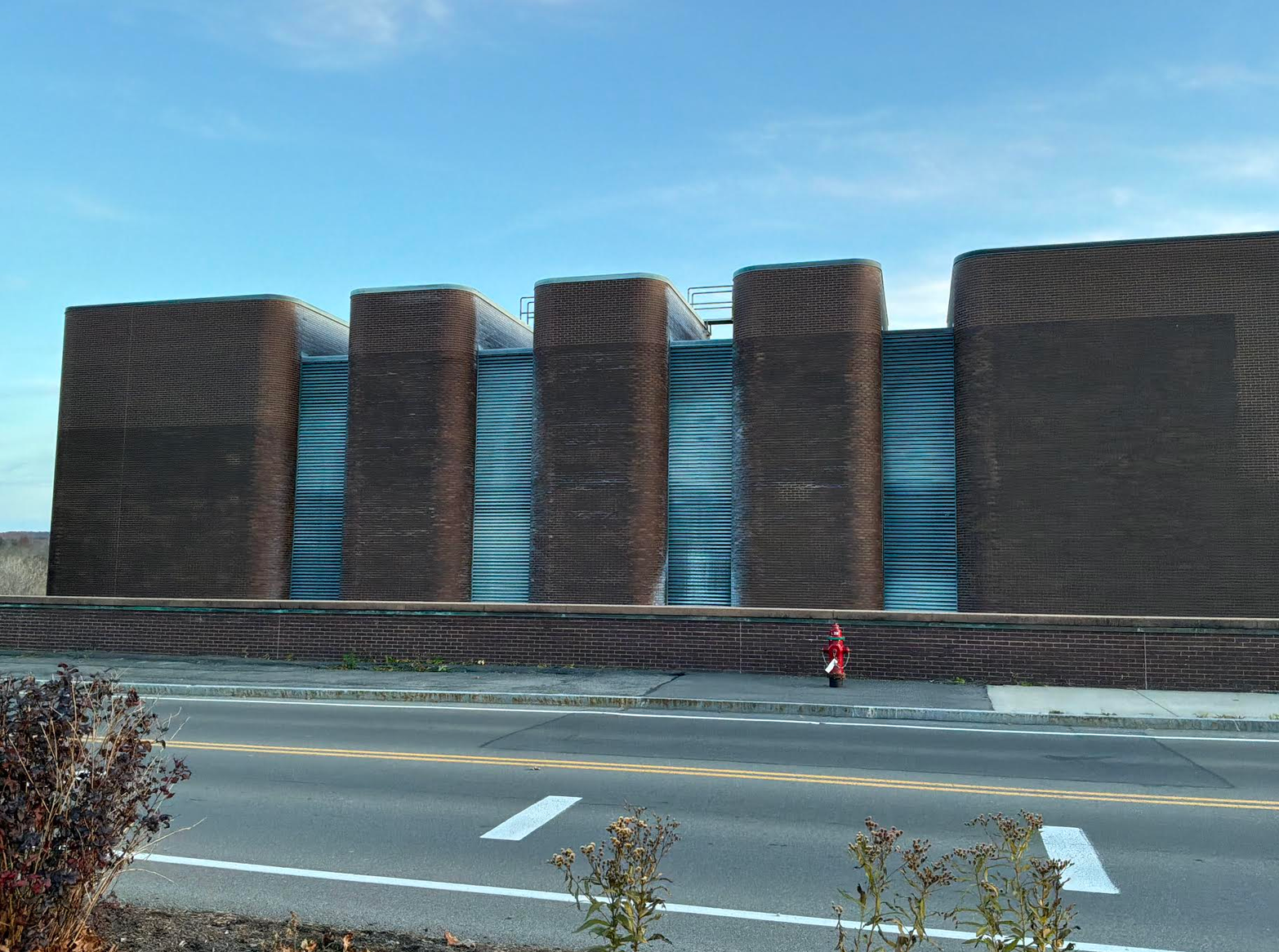
Cornell hosts a number of particle physics facilities, a testament to the university’s enduring commitment to high energy physics. Perhaps the most recognized among the general student body is the Cornell Electron Storage Ring (CESR), spanning 768 meters just 40 feet underneath campus. Originally an electron-position collider, a major purpose of CESR now is supplying X-rays to the Cornell High Energy Synchrotron Source (CHESS) [2]. CHESS specializes in synchrotron radiation, the phenomenon that occurs when low-mass charged particles travel in a curved path at relativistic speeds (near the speed of light) through a magnetic field [3, 4]. Synchrotron radiation has a continuously growing prevalence, today in medical imaging research and radiotherapy [13]. Now, several projects are nestled within CHESS, including high-energy and magnetic field sciences, materials science groups, a structural biology facility, as well as an upcoming 2028 X-ray facility specializing in processes of biological and life sciences [5]. If anything, particle accelerators have become somewhat of a university tradition. Cornell keeps it going with its current focus on developing an Energy Recovery Linear accelerator and the International Linear Collider [6].
Photographs by Rebecca Lee. She can be reached at rl898@cornell.edu
LASSP, CCMR, CNF, and KIC all contribute to making Cornell a leading institution for condensed matter, nanoscience and materials science. The Laboratory of Atomic and Solid State Physics (LASSP) divides its research into two major sectors: quantum condensed matter, which includes superconductors and cryogenics to quantum and topological materials, as well as biophysics & soft condensed matter physics, which spans from atomic and nanoscale technology to protein crystallography and complex systems [7]. The Cornell Center for Materials Research (CCMR) oversees instruments whose purposes range from spectroscopy to probing material properties or polymer analyses, as well as a glass shop that supports Cornell students and researchers with custom glassware supplies and repairs [8]. In the nanoscale realms, the Cornell NanoScale Science & Technology Facility (CNF) operates both academic research and company collaboration development by fabricating micro- and nanostructure technology [1, 9], and the Kavli Institute at Cornell for Nanoscale Science (KIC) currently focuses on electron and optical technologies [1].
Lastly, CLASSE, CAC and NBTC take interdisciplinary physics to the next level. The Cornell Laboratory for Accelerator-based Sciences and Education (CLASSE) supports both high-energy physics and condensed matter and materials sciences, with applications from biophysics to cosmology [10]; the Cornell University Center for Advanced Computing (CAC) services the university’s computational research and cyberinfrastructure needs [11], and the Nanobiotechnology Center (NBTC) bridges biophysics and nanotechnology [1]. Although each of the eight facilities has its own specialty field, neither breadth nor depth are sacrificed. Perhaps it is unintuitive at first to find an agricultural-focused facility within a synchrotron source, but if Cornell’s experimental physics research is taken with the value it commands, the bridges to other fields are, if anything, stronger — a testament to “exploration across boundaries” [12].

(Heidi Yoo ‘30 is the College of Arts & Sciences. She can be reached at hy695@cornell.edu