The Rise of Athlete Injury Risk: Impacts from Synthetic Turf Playing Surface
Written by Leah Chang
Edited by Tanishka Jape
Imagine the first beautiful sunny day emerging out of the darkness of winter and into the sunlight of a fresh spring. With blue skies and a gentle breeze, this is perfect weather for players to head outside for a fun game of soccer outdoors at their local park. Instead of being greeted by soft blades of thick green grass however, they sit down and run their fingers over the rough plastic fibers infilled with black pellets. This is the reality of synthetic turf, an artificial playing surface that has dominated many fields for youth and collegiate sports.
Artificial turf has grown in popularity, replacing natural grass fields due to the low-maintenance requirements for upkeep. Once placed down and installed, there is minimal extra work needed. This is a stark contrast to natural turfgrass, which is an entirely natural surface grown for the purpose of athletic use. In recent years, playing surfaces for athletes have largely impacted injury rate, creating an epidemic for skyrocketing increases in a wide range of player injuries, particularly anterior cruciate ligament (ACL) tears in the knee. Natural biomechanical movements are altered and dangerous risks may depend on the types of turfgrass used in various sports.
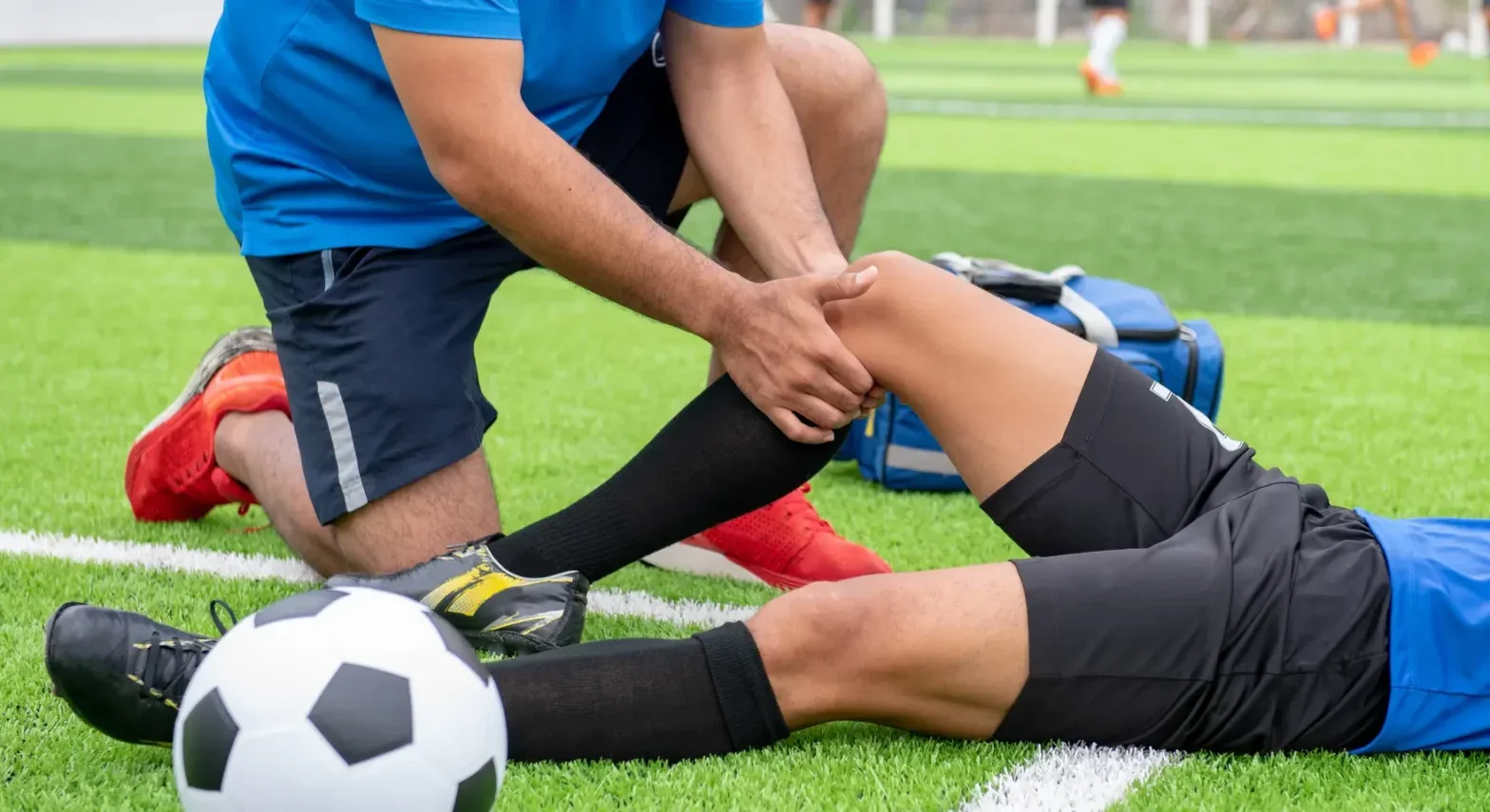
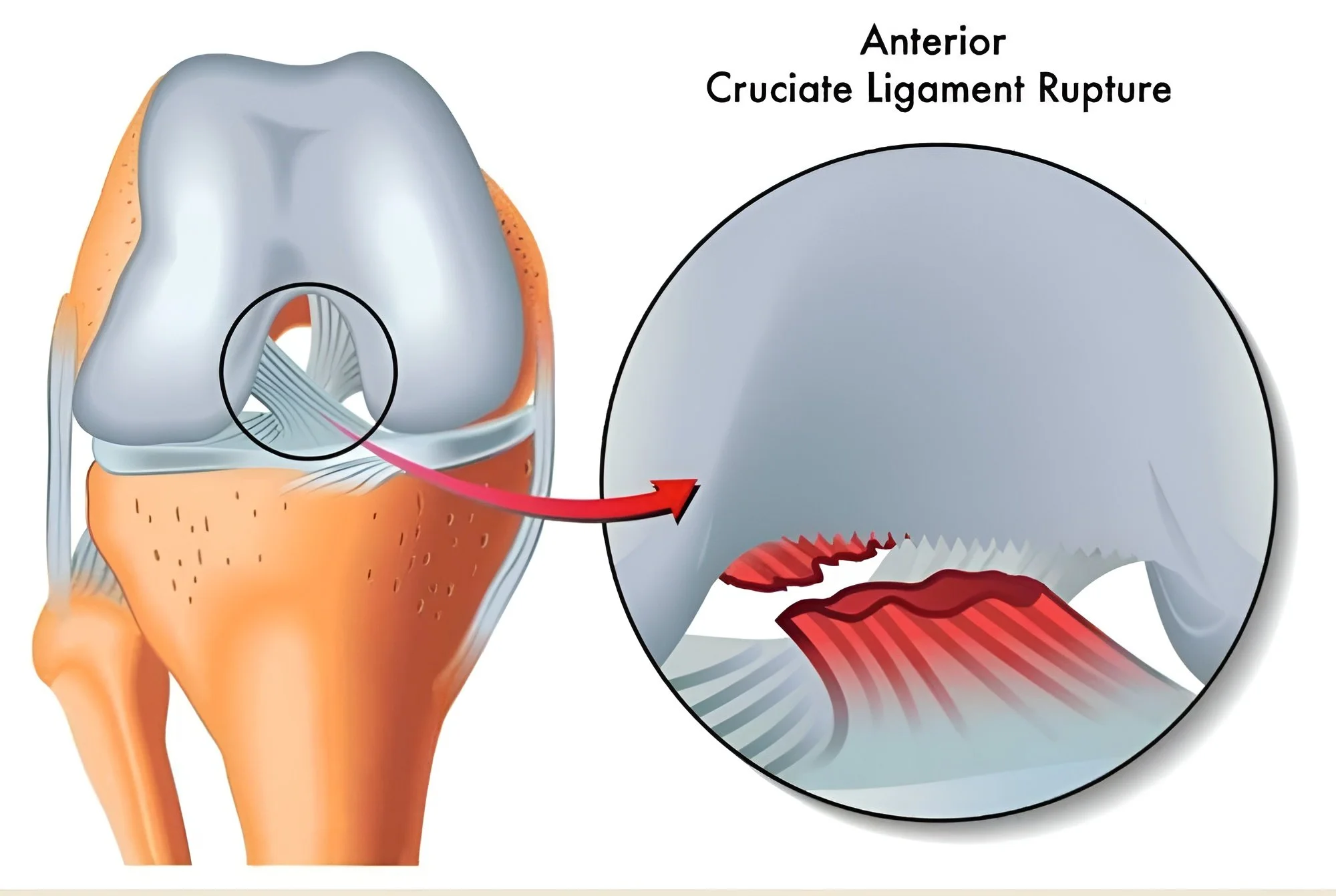
Photos from UnderstandOrtho (left) and The Joint Clinic (right). Curated by Hailey Foster (hf348@cornell.edu).
Using PRISMA (Preferred Reporting Items for Systematic Reviews and Meta-Analyses) guidelines, a group of researchers conducted an analysis titled, “Lower Extremity Injury Rates on Artificial Turf Versus Natural Grass Playing Surfaces: A Systematic Review.” Authors explored current ways researchers are examining the types of lower extremity risks and injuries across a myriad of sports and various levels of competition (Gould et al., 2023). They created comparisons of turf types categorically as well as temporally, which were identified as old-generation or new-generation turf. Out of the total 53 articles published over the span of the last 50 years, they found that soccer players had higher rates of injuries when playing on artificial turf.
To learn more about player knee injuries at the collegiate football level, researchers conducted a decade-long descriptive epidemiology study where they investigated injury and exposure rates for all NCAA football athletes in an article titled, “Incidence of Knee Injuries on Artificial Turf Versus Natural Grass in National Collegiate Athletic Association American Football: 2004-2005 Through 2013-2014 Seasons.” After using a surveillance system and exposure data sets, it was found there was exposure to 2460 out of 3 million total players, and that posterior cruciate ligament (PCL) tears spiked in competition on artificial turf in comparison to natural grass. NCAA Division II and III football players had higher rates of anterior cruciate ligament (ACL) injuries.
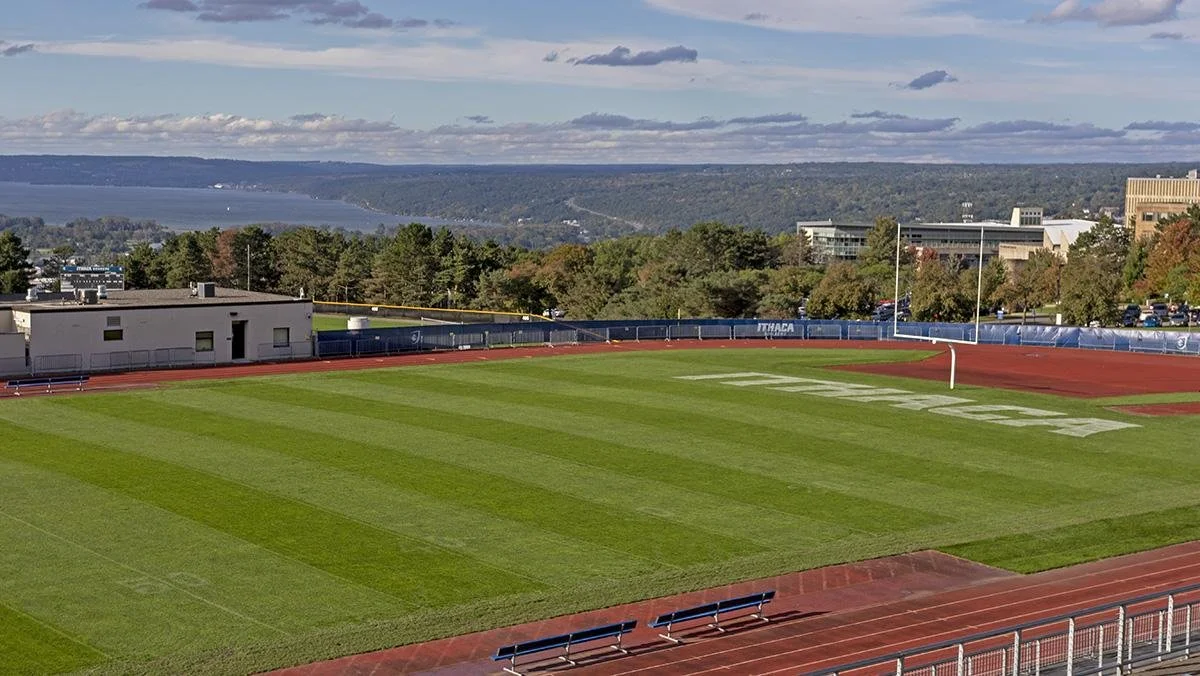
Photo from Malik Clement via The Ithacan. Curated by Hailey Foster (hf348@cornell.edu).
Consistent patterns in mechanism and rate of ligament injuries on artificial playing surfaces demonstrate a prominent risk factor in field type when playing high-level sports. The methods used for turfgrass growth involve research and communication efforts from both agricultural and biomechanical experts to address the safety of all players prone to injury due to pivoting motions on inadequate artificial playing surfaces. Shifting focus towards efficient natural turfgrass growth and implementation in human health and the environment are at the forefront of reducing harm to players at any level.
Leah Chang ’28 is in the College of Agriculture and Life Sciences. She can be reached at