Disease vs. Disease: Rabies Battling Depression
Written by Anthony Tannous
Edited by Claudia Reines
Psychological disorders like depression are often viewed as mental battles— the mind fighting to overcome its self-sabotage. While chemical imbalances were discovered to be responsible for this illness very early on around the mid-20th century, it was only recently that this biological origin was leveraged to treat depression. Antidepressants were only popularized in the early 1990s, and the marker for genetic predisposition to depression was only isolated in 2003. As the age of social media ushered in, psychiatrists stressed over a surge in diagnoses of depression, especially among Gen-Z and Gen-Alpha teenagers. As a result, the stakes for clinicians and researchers heightened, culminating in a race to innovate treatments for this ubiquitous disease.
Cornell researchers have found themselves at the forefront of this movement. Chiefly, Alex Kwan and his lab in the Meinig School of Biomedical Engineering are working to underpin the neurological basis for psychological disorders. Kwan Lab investigates the neural pathways responsible for depression symptoms and uncovers the potential of using psychedelics to prevent them. In December, his lab published its most recent breakthrough with the drug psilocybin, derived from a naturally occurring psychedelic mushroom. From past research with rabies, the team knew what regions of the frontal lobe would respond to psilocybin, but they sought to map the specific network of neurons formed during this treatment and to investigate how frequently these neural connections were made.
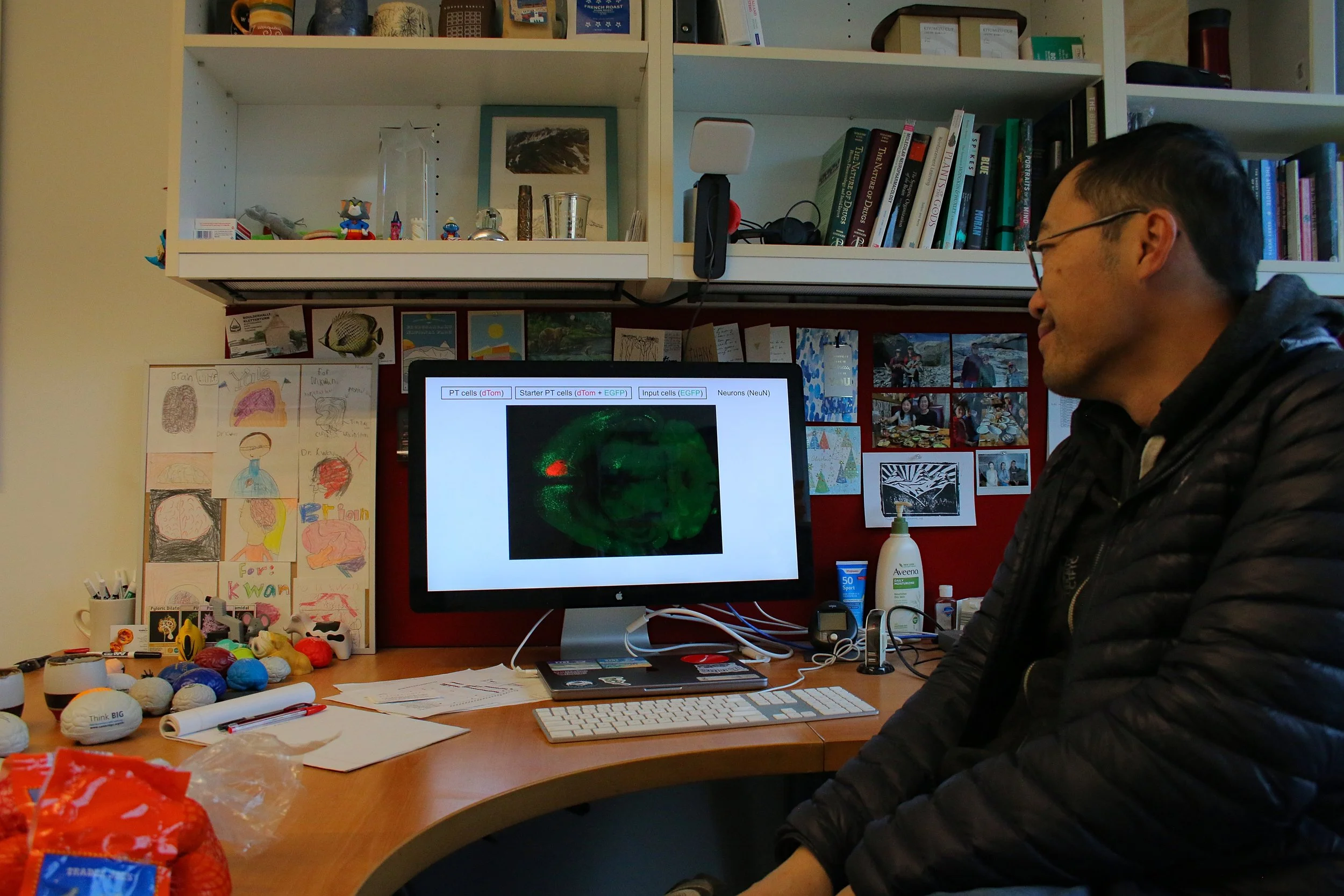
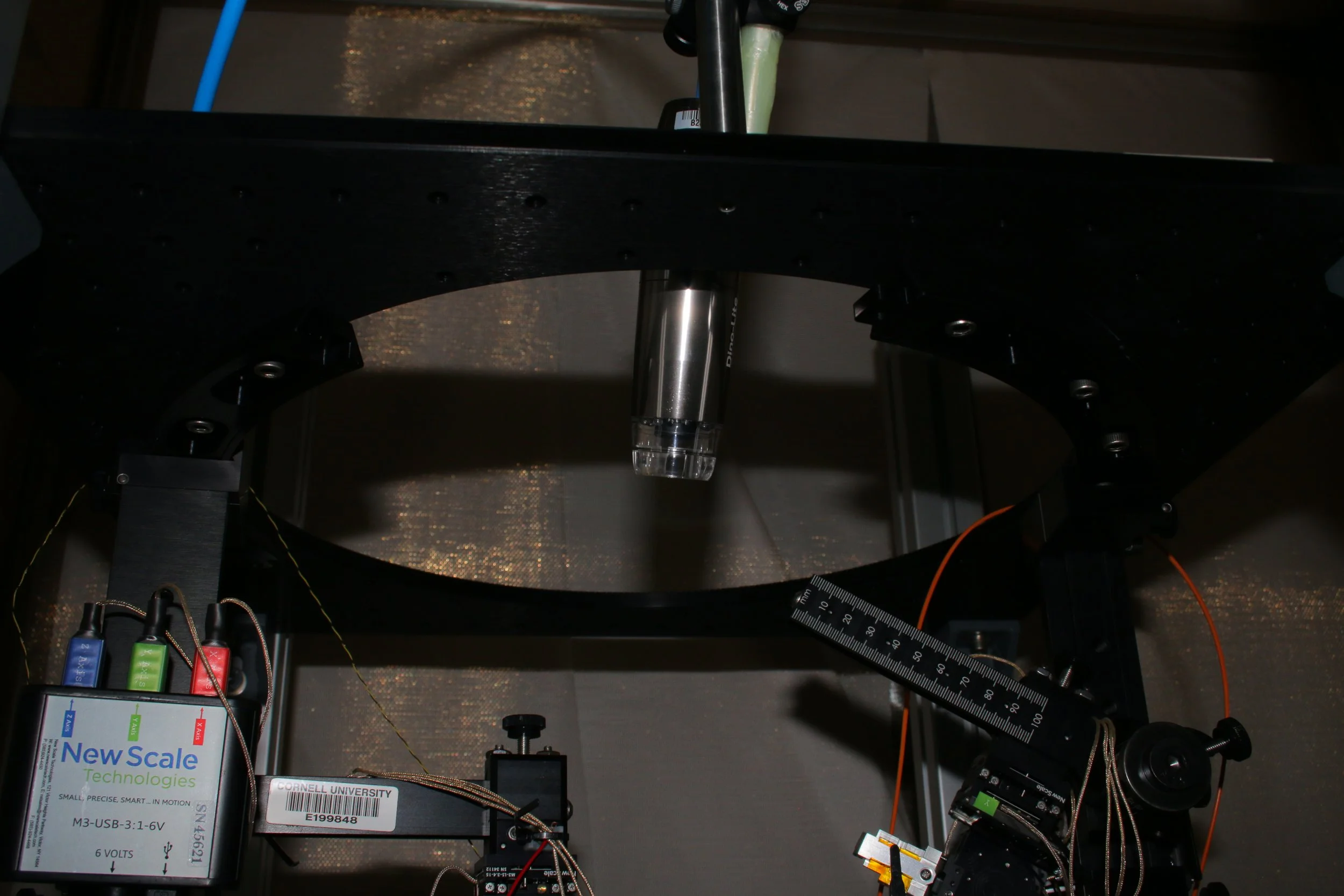
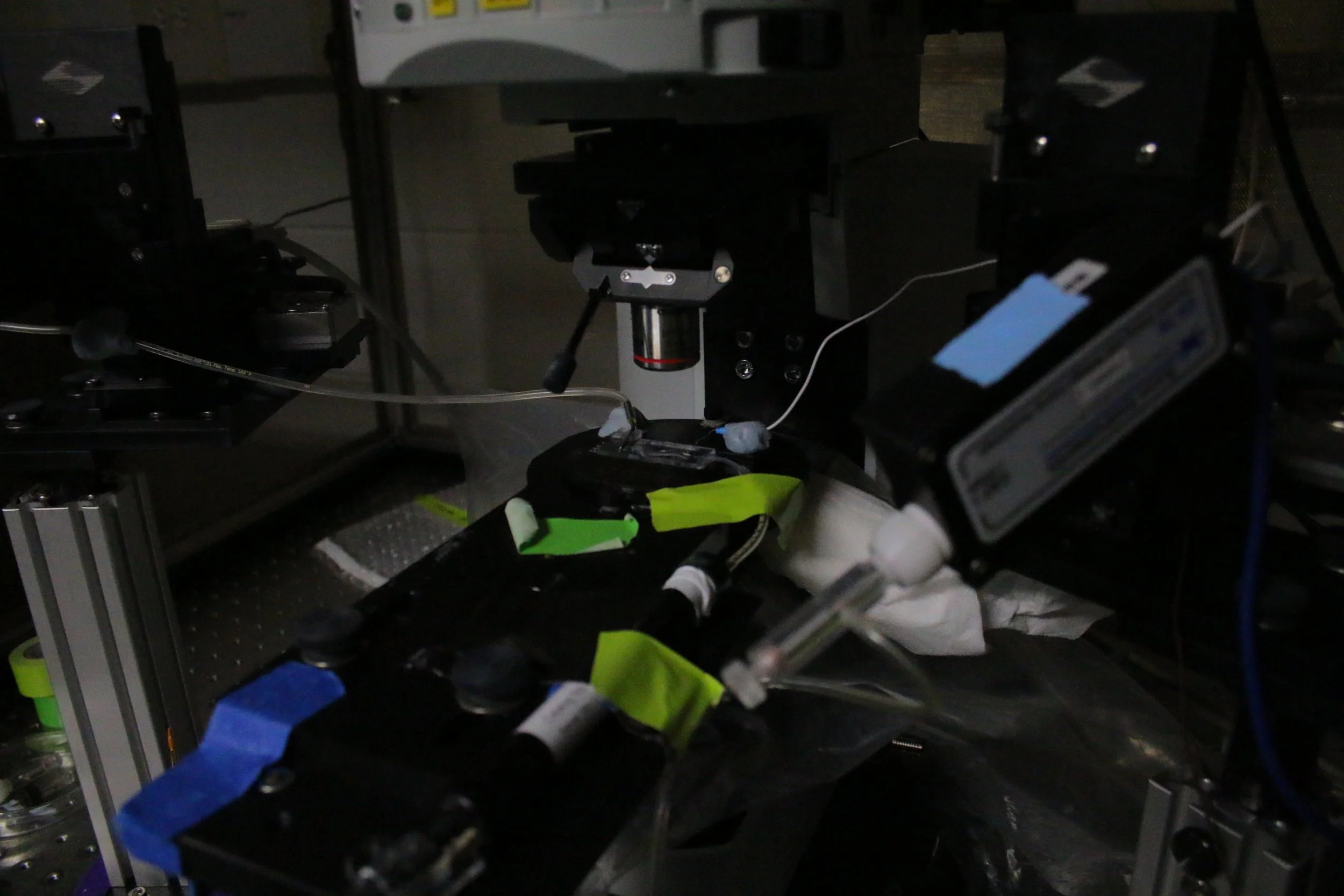
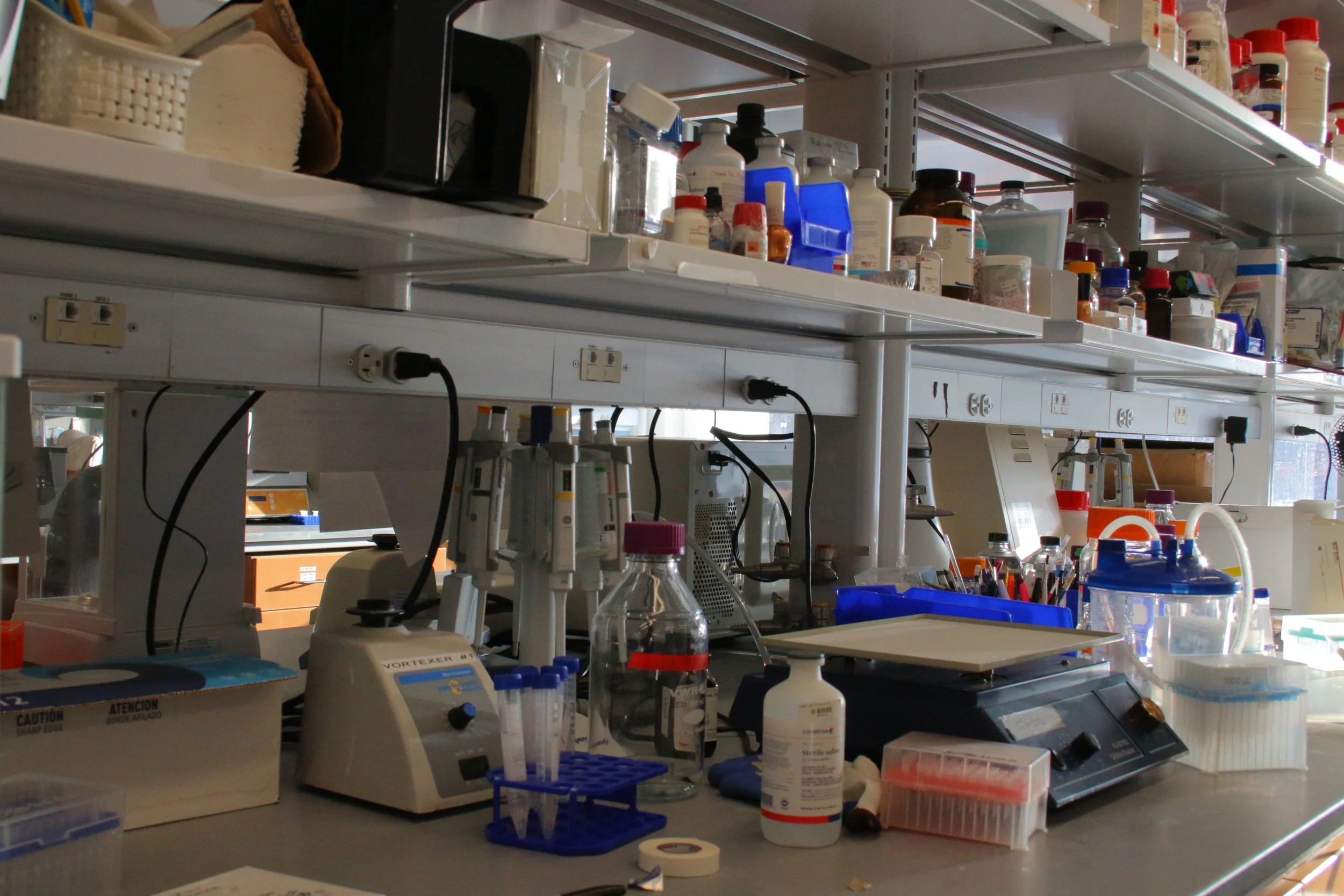
Photos taken in the Kwan lab by EllaRose Sherman (eks92@cornell.edu).
Kwan and his team were posed with the unique challenge of being able to image and track the neural connections stimulated by psilocybin, and the solution was injecting rats with rabies! The fatal nature of rabies is due to its ability to rapidly spread throughout the nervous system once it enters a host. Its capacity to instantly leap from synapse to synapse makes rabies perfect for chasing after the neural signals generated by psilocybin. By injecting their rat specimen with rabies and tagging their neural connections with fluorescent proteins, Kwan’s team successfully tracked the path of the rats’ neural activity. They uncovered two of psilocybin’s positive effects on the brain’s frontal lobe: first, it slows down the cyclical firing of cortical neurons, which is believed to form memory-like loops of negative thoughts during depressive episodes; additionally, it enhances the conversion of sensory input into motor action – a process thought to prevent symptoms of apathy in humans. As a result, Kwan’s team was able to prove the value of this psychedelic in preventing depression symptoms without needing to alter hormone activity like most traditional antidepressants do.
Kwan and his lab are not merely content with these findings, though, because psilocybin is also capable of forming unfavorable neural connections. However, rabies is such an efficacious brain-imaging tool that Kwan’s team believes they can harness it into learning how to regulate all frontal lobe activity. Specifically, they plan on using this imaging to limit the formation of negative connections made by psychedelics and increase the frequency of connections beneficial to treating depression symptoms.
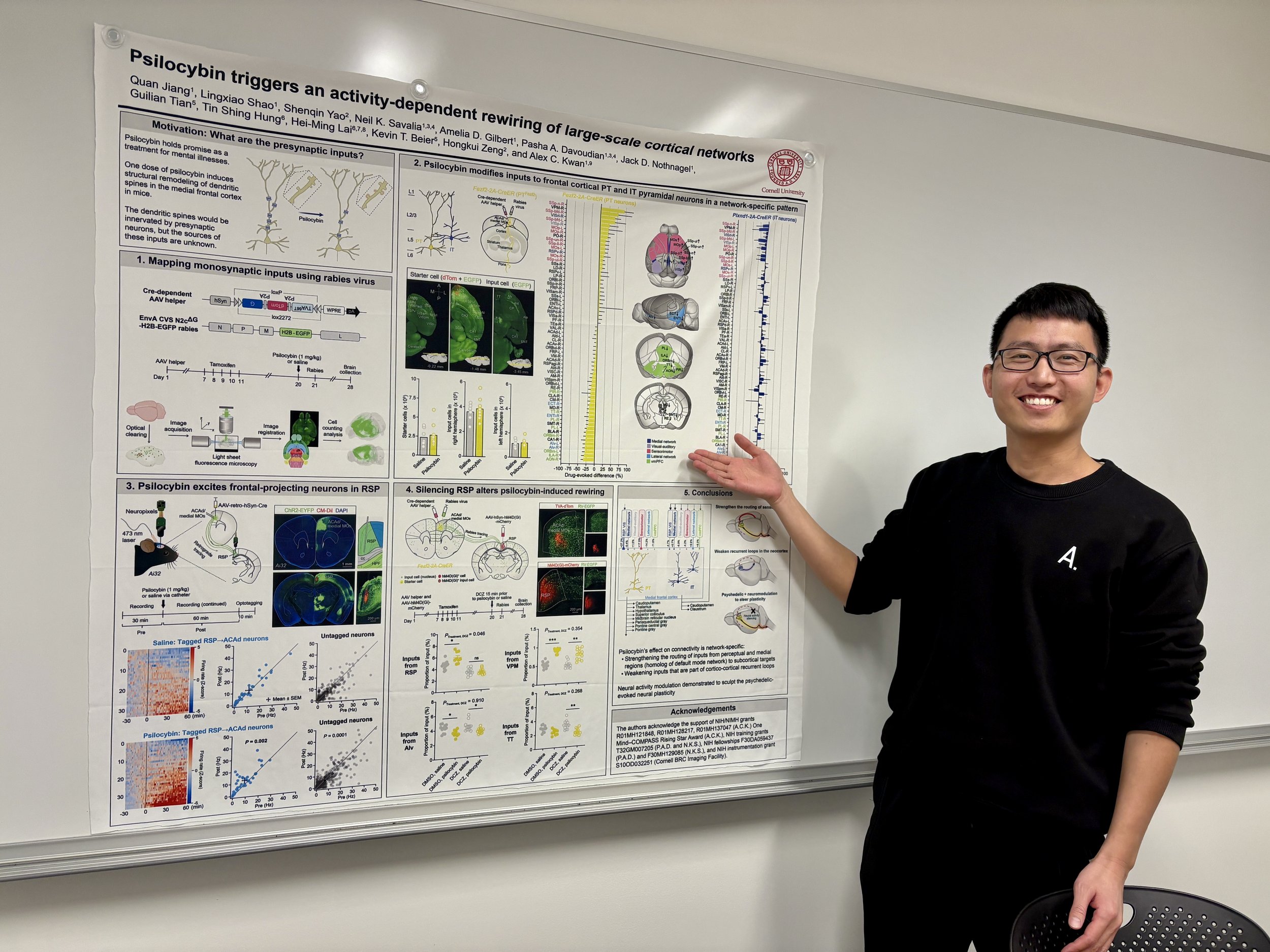

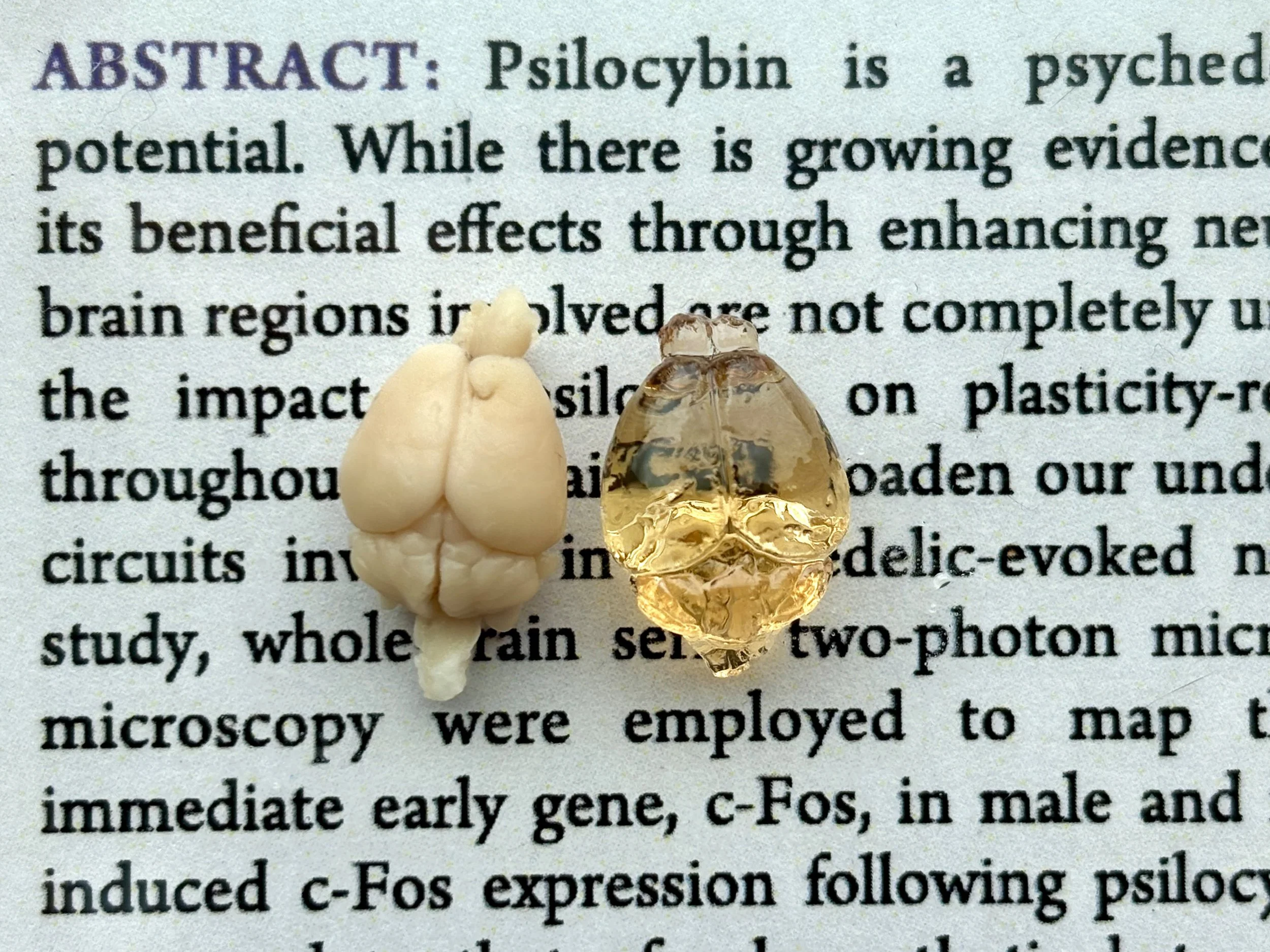
Photos of Quan Jiang next to poster (left), Quan working on the computer (middle), and a cleared brain (right). Taken by Dr. Alex Kwan, shared by EllaRose Sherman (eks92@cornell.edu).
Cornell does not have the only research team that has leveraged rabies as a powerful imaging tool either. Just last year, researchers used the rabies retrograde virus to explore how glioblastoma tumors accelerate their own growth by interconnecting cancer cells with the neural network of the brain. From this breakthrough in cancer imaging, researchers are now capable of learning how early these tumors can be detected and how they can sever the neural connections between tumors and brain matter. Researchers at UC Irvine were also able to use rabies to trace signal changes caused by dementia by recording changes in neural circuitry to model the progression of Alzheimer's in mice.
From imaging of mental disorders to investigation of neurodegenerative diseases, rabies has proven to be the conduit to investigate an untapped field of treatment for neurological diseases. Alex Kwan’s lab has made Cornell a pioneering front for this research, and with further mapping of the brain on the way, his hopes for neural treatment of depression are unbounded.
Anthony Tannous ‘29 is a biological sciences major in the College of Arts and Sciences. He can be reached at agt58@cornell.edu.
A big thank you to Dr. Alex Kwan and the Kwan Lab for their guidance and support with this article! We would also like to extend our gratitude for his gift of a camera, lens, and camera bag to CURM photography team!
Sources:
https://www.sciencedirect.com/science/article/pii/S266656032200038X#bib55
https://www.psychiatryredefined.org/a-brief-history-of-antidepressants-and-ssris/
https://news.cornell.edu/stories/2025/12/dose-psilocybin-dash-rabies-point-treatment-depression
https://www.ucihealth.org/about-us/news/2024/02/rabies-viral-vectors?