Greening the TCAT: The Transition to Electric
Written by Pavi Jayakumar
Edited by Grace Koch
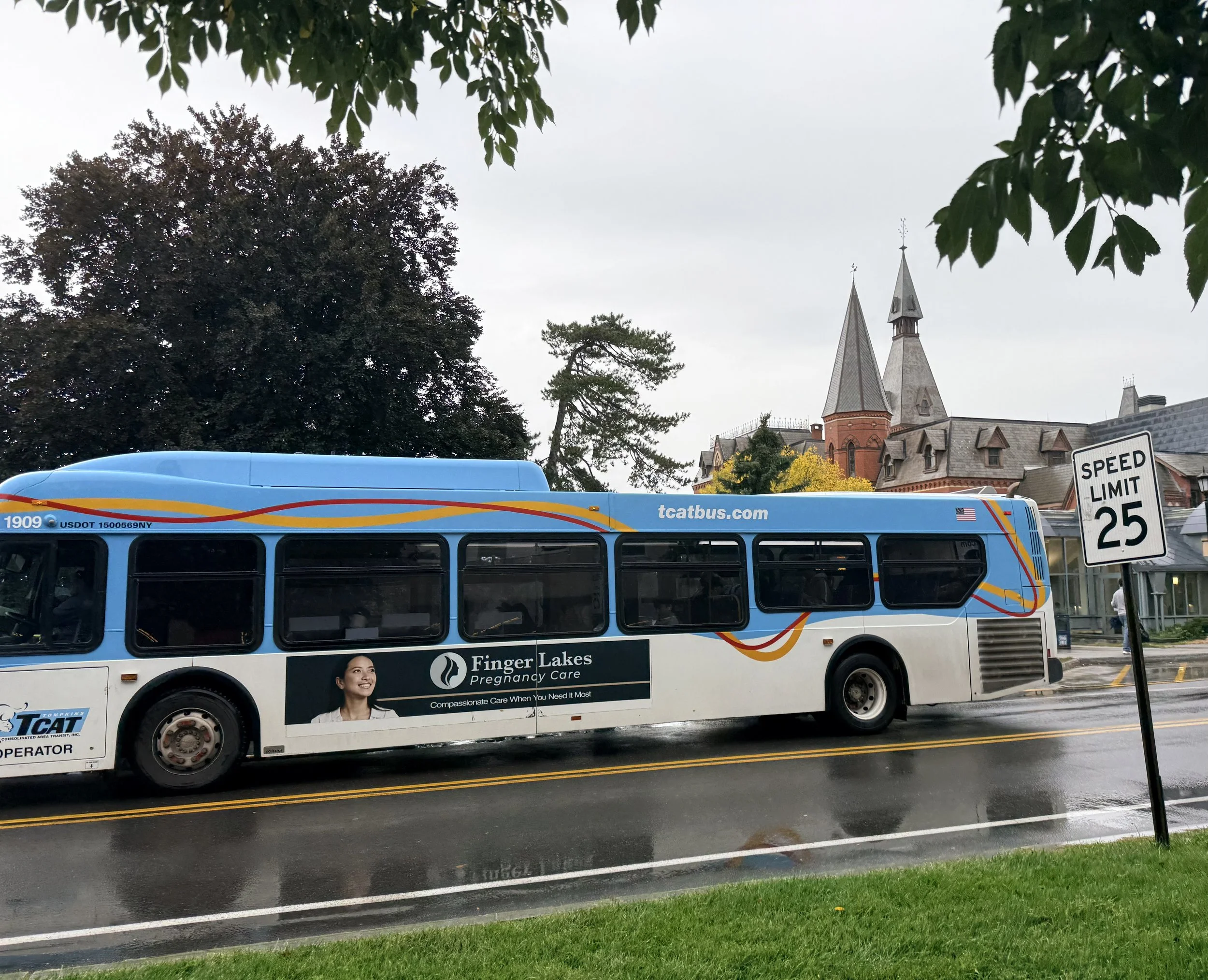
Most, if not all Cornell students have a lot to say about the Tompkins Consolidated Area Transit, familiarly known as the TCAT. It serves the greater Ithaca area, meaning thousands of college students—- though most have learned not to rely on it. The TCAT is not perfect (no public transportation systems are), and has its fair share of late arrivals and ghost buses due to various issues, e.g. increasingly older buses and a long ongoing bus driver shortage. The TCAT has also faced a rather unique challenge in recent years: going electric.
To become more sustainable and energy-efficient, some public transportation systems have recently begun transitioning to electric buses. And yes, this transition had the desired effect in most cases: increased energy efficiency, lower costs of electricity in comparison to fossil fuels. However, as a 2024 study analyzing the battery-electric buses (BEBs) in Portland, Oregon concluded, they are also correlated with more limited range and added operational costs. These costs of going electric cannot be ignored.
In 2021, the TCAT was the latest to push forward in sustainability, with a pilot fleet of seven Proterra battery-electric buses. They connected with Cornell Engineering Professor Max Zhang, head of the Energy and the Environment Laboratory, who led a research group to analyze the pilot fleet’s performance. What concerned the group most was Ithaca’s climate. Cornell students who have lived here long enough will say, with no uncertainty, that Ithaca’s winters are a special kind of bone-chilling. The cold, along with heavy precipitation with little warning, means that the depths of winter are the hardest months for the TCAT. This immediately presented a problem for the new BEBs: batteries in electric vehicles operate at about 75 degrees Fahrenheit, so the colder they are when they start, the more they need to self-heat.
Photos taken by Christina Chen (yc2953@cornell.edu).
Professor Zhang’s research team compiled data for each BEB, including metrics of energy consumption, the temperature inside the battery and surrounding it, and geographic location (Ithaca widely varies from being rural to urban, which impacts energy consumption. Urban areas have more stops, for example, which means buses use energy just by idling more at bus stops). As the buses operated, they uploaded real-time controller area network data to a portal. After analyzing this data, Professor Zhang’s group not only found that BEB batteries consume more energy during the winter, but that nearly half of that energy was spent on battery heating.
Before Professor Zhang and the TCAT could further collaborate to improve these issues, a safety consultant discovered serious design flaws in the Proterra buses that rendered them inoperable. And so the underperforming yet promising pilot Proterra fleet was, as the TCAT worded it, “mothballed.”
Photos taken by Christina Chen (yc2953@cornell.edu)
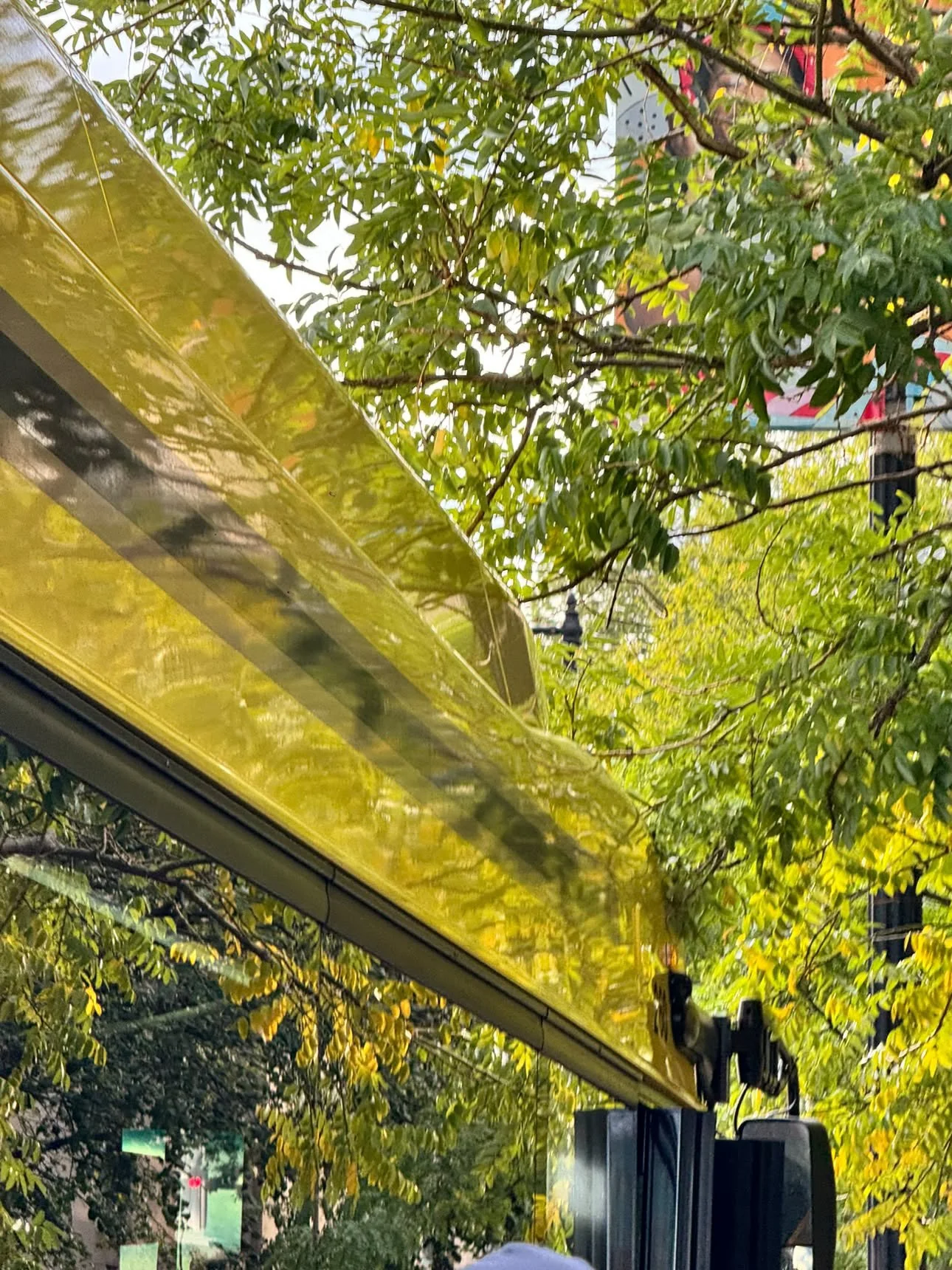
People around greater Ithaca today, however, will notice a number of sporting TCAT e-buses running alongside the diesel buses. Where did they come from? Continuing with their sustainability goals in 2025, the TCAT turned to Gillig, a California-based manufacturer, for five diesel buses and six electric. According to TCAT’s system reports, canceled trips (one of the TCAT’s biggest struggles) dropped to 145 out of 18,275 trips in August 2025, from 616 out of 18,000 in July. The TCAT wasn’t done yet, though. In February 2026, they procured two diesel hybrid buses from Gillig, in hopes of blending sustainability with efficiency. TCAT General Manager Matthew Rosenbloom-Jones stated that while the TCAT has had hybrid buses before, these new buses have a new trick: they can switch between electric power and diesel fuel. The electric power is useful in noisy areas for its quietness, and when idling to cut down on emissions.
Now, does this transition to more electric and hybrid TCAT buses mean Cornellians will no longer have to wait at Statler Hall in vain for a bus that will never come? Perhaps not (although according to the data so far, it’s possible!). What it does mean is that the TCAT is a few steps closer to being a greener presence on campus, and a leader in sustainable public transportation. Hopefully, Cornell continues to collaborate with the TCAT and conduct more research in Professor Zhang’s footsteps, and together they can make Ithaca an example of sustainability benefiting our community.
(Pavi Jayakumar ‘29 is in the College of Engineering. She can be reached at pj299@cornell.edu).
Sources:
https://news.cornell.edu/stories/2025/05/electric-buses-dont-cold-study-finds
https://www.sciencedirect.com/science/article/pii/S1361920925002196?via%3Dihub#s0115
https://www.sciencedirect.com/science/article/pii/S1361920924000774#s0050
https://ithacavoice.org/2026/02/new-hybrid-tcat-buses-to-make-their-maiden-voyage-to-ithaca/