A New Dimension in Medical Education
Written by Rebecca Lee
Edited by Renee Lee
Medical school and subsequent training involve a plethora of reading as well as memorizing a significant amount of information. However, what if there was a way to transform words from a textbook or a computer into something more tangible?
Cadaver labs are, of course, one way to obtain a more realistic educational experience of how organs are oriented in the body alongside potentially pathological phenomena. However, in addition to this educationally advantageous opportunity, three-dimensionally printed medical models also provide an impactful mechanism for education to promote patient engagement, decreased anxieties, and increased understanding [1]. Furthermore, these medical models brought opportunities for medical providers to utilize such models, ultimately assisting them with their care approaches in crucial ways [2].
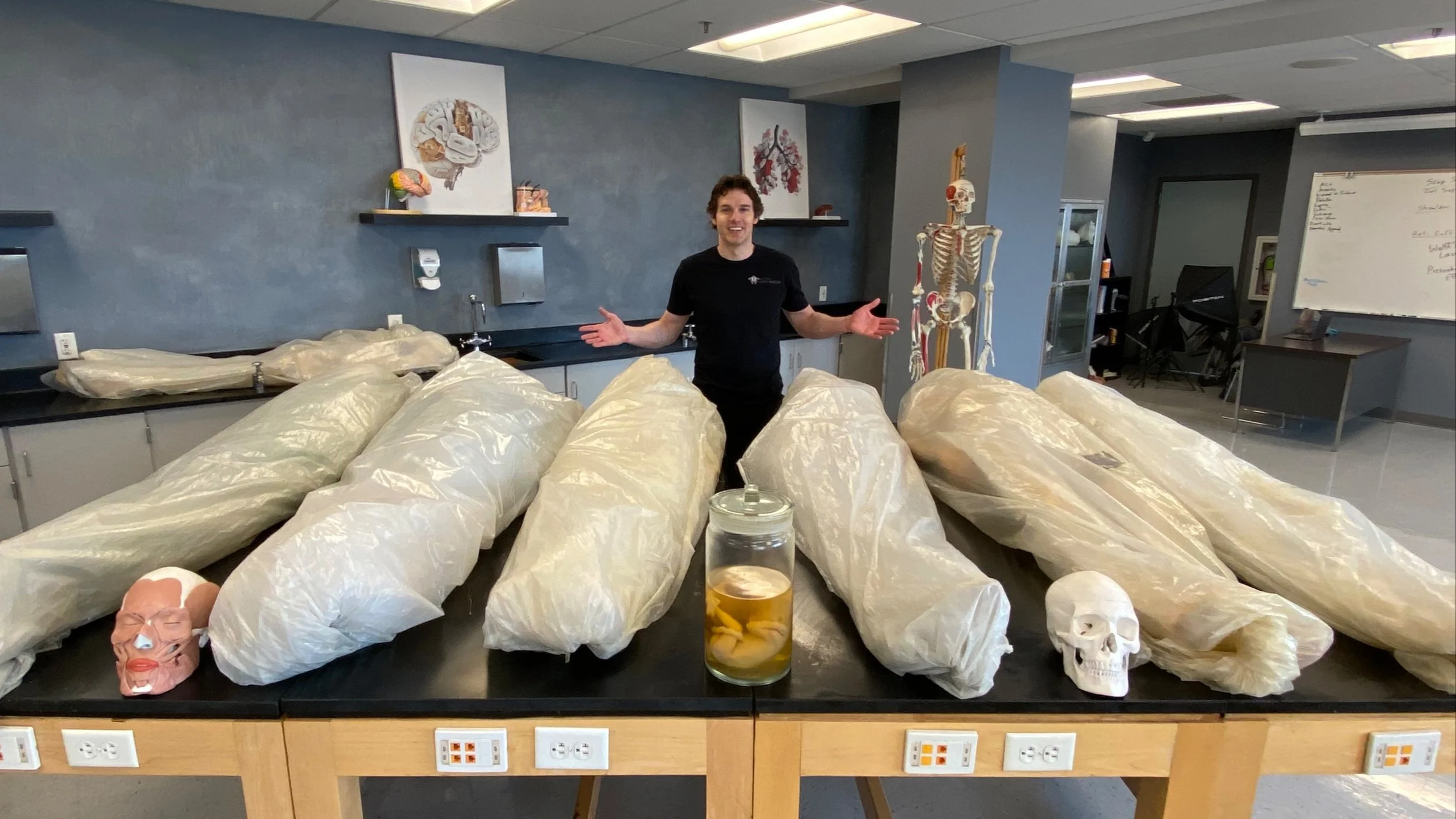
Photos from Institute of Human Anatomy. Curated by Hailey Foster (hf348@cornell.edu).
What is remarkable about such models is their ability to incorporate art and design into an essential role in medical care, which is something a company named Stryker has epitomized [2]. Stryker, for instance, holds medical models that offer visualization of the skull/parts of the jaw that were produced utilizing actual patient CT information [2]. Many benefits came with these models, such as specialization to patient anatomy, facilitation of planning for complicated medical cases, sterilizability so the models could be utilized during surgery, and even selective coloration for highlighting certain structures [2]. This reflects the significant applicability of artistic design in modeling for healthcare— ranging from improving understanding of medical circumstances to actual utilization during surgical treatments.
These sentiments seem to be shared by authors like Sahu et al. (2025), who recognized the advantageous application of 3D as well as 4D printing for patient-personalized medical care in terms of anatomical models, but also in regards to drug delivery, custom implants, and prosthetics [3]. However, it is also important to consider how they acknowledged potential limitations of these applications, including biocompatibility, approval, and ethics [3]. Due to this, Sahu et al. (2025) seems to be aware that despite the innovative impact these 3D/4D advancements possess, there are still additional steps and obstacles that must be overcome.
Based on these sources and input, the practical applications of such medical modeling are clear. Going back to the first introduced perspective regarding the positive impact of 3D printed health models—such utilization of a model like this has shown to substantially lower, “mean anxiety scores…compared with conventional methods” [1]. Khan et al. (2025) also described the significance of these 3-dimensional models because patients receiving surgery, “report a lack of involvement in health care decisions and increased anxiety” [1]. In addition to the descriptions of [2] and [3], this view further contextualizes the diverse and beneficial scope of circumstances that these models can be applied towards.
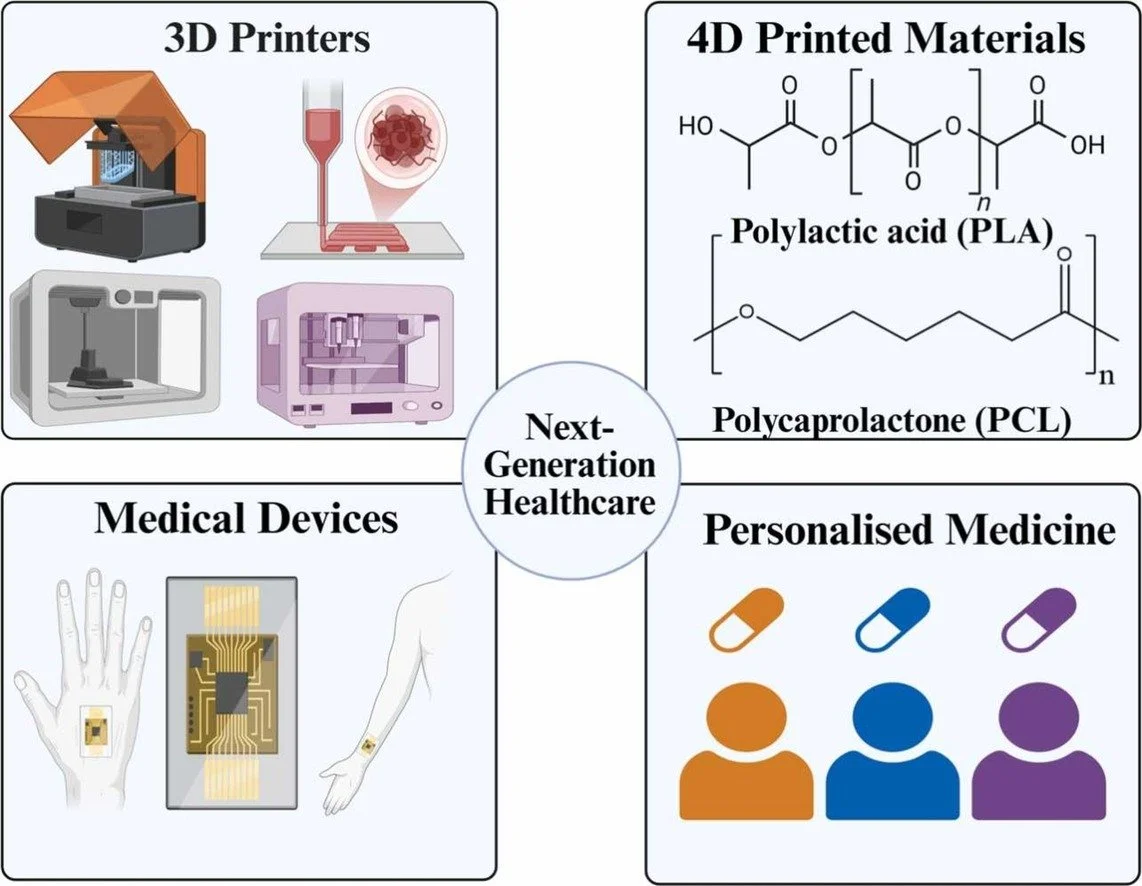
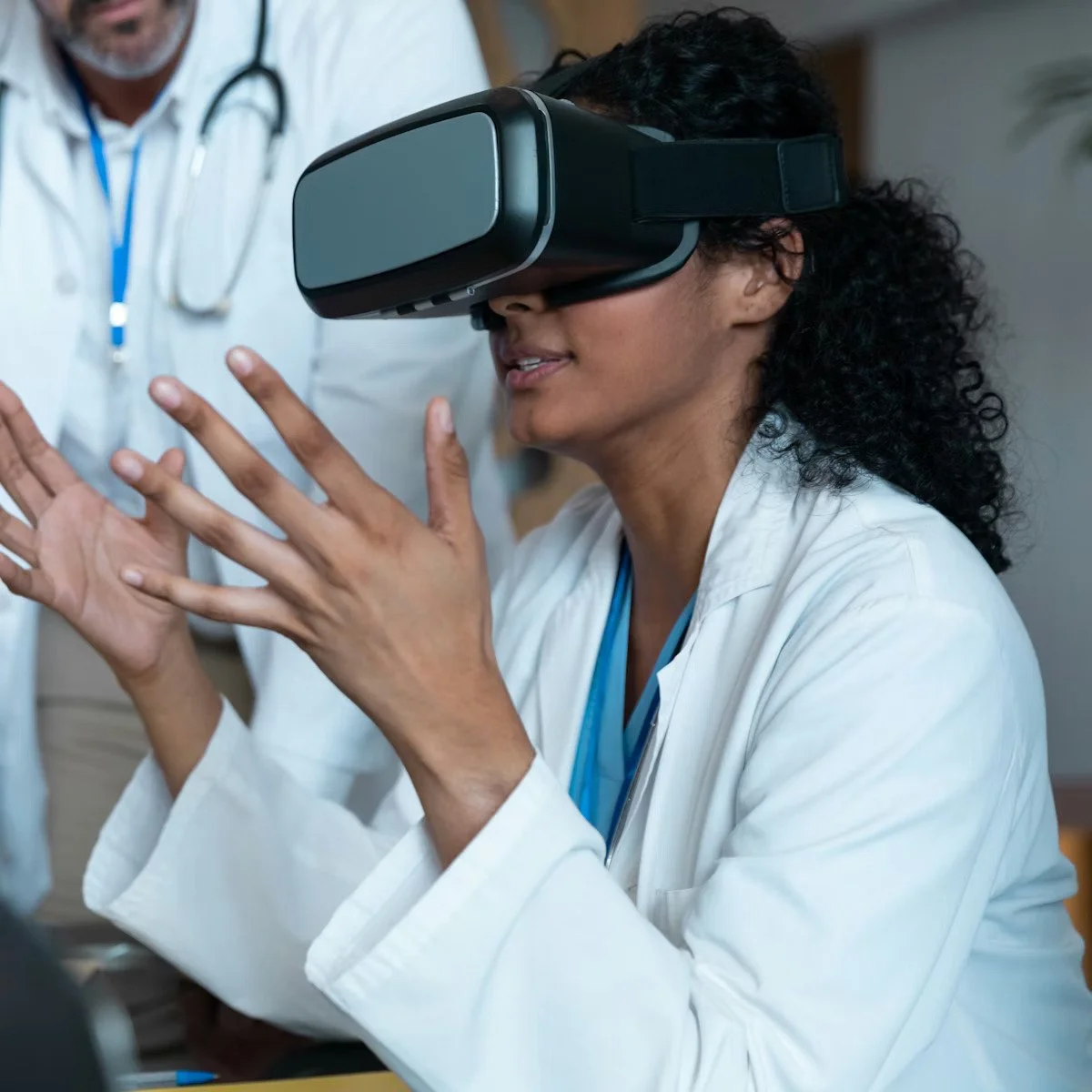
Photos from Sahu et. al (left) and the U.S. Chamber of Commerce (right). Curated by Hailey Foster (hf348@cornell.edu).
The sources brought to attention above point toward a favorable future of medical modeling. Not only do they help medical providers in high-stakes treatments like surgery [2], but they also influence how patients view medical care by relieving some nervousness about their treatments while increasing awareness [1]. In addition, the National Institutes of Health even has a 3D workspace that includes information about Virtual Reality features, protein modeling capabilities, and an extensive library with at least 12,000 virtual assets [4]. Based on this source, it is clear that 3D modeling holds immense potential for building upon innovative aspirations and bioscientific creativity, even digitally [4]. These impactful applications of medical models represent a bright future in the realm of interdisciplinary medical innovation.
Rebecca Lee ‘28 is studying Human Biology, Health, and Society in the College of Human Ecology. She can be reached at rl898@cornell.edu.