Framing Reality: The Art Behind Scientific Images
Written by Andrea Mendez Aguirre
Edited by Raghav Tewari
A friend asked me the other day, "Have you ever thought about how big the Sun is?" "What do you mean?" I asked. "Like, yes, we know it's big, but do you actually know HOW big?" The answer shocked me. It turns out you can fit 1.3 million Earths inside the Sun. You see, the idea I had of the Sun was built around the model I made in 4th grade, or the image I saw on TV, where the Sun is big, but never quite to scale. That got me thinking: what other perceptions have been shaped by images that are mere interpretations? Our best attempt at capturing reality, when an exact portrayal becomes impossible.
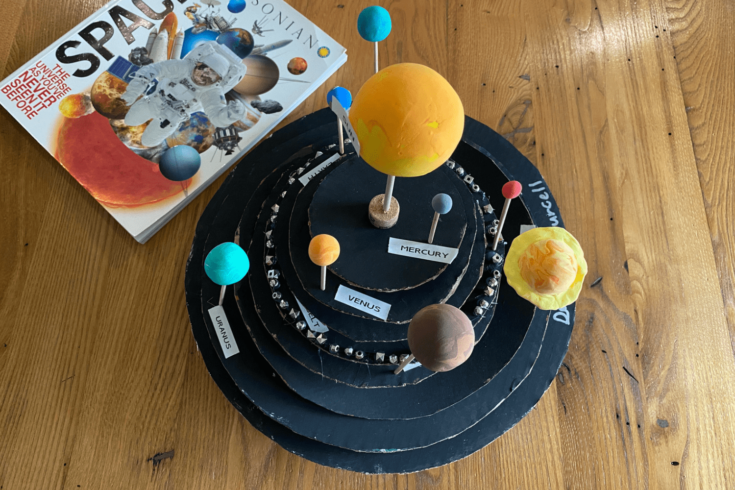
Photo of Solar System model from Thoughtfully Sustainable. Curated by Andrea Mendez Aguirre (am3362@cornell.edu).
That is the beauty, wonder, and danger of scientific images. When we encounter one, we are unlikely to question its reliability and quick to assume that whatever it presents must be a close depiction of reality. However, just like works of art, scientific images are constructed representations in which aesthetic choices mediate how knowledge is produced and understood. This is not a call to doubt every image you see from now on, but rather an invitation to appreciate how creative the human mind is and how art can be found in the unlikeliest places.
Have you ever looked at a fluorescent microscopy image? If I didn't know any better, I would assume these were some kind of abstract, modern painting. Full of vibrant colors and psychedelic compositions, the last thing one might guess is that they were taken by a microscope. Microscopy, however, is one of the clearest examples of how science deploys aesthetic choices for a particular purpose. In fluorescent microscopy, color highlights molecular interactions, cell dynamics, and other critical information. Other techniques tint cells to enhance structures, increase contrast, or adjust magnification depending on what the scientist wishes to reveal. Highly useful, but how faithful to reality can we claim these images to be?
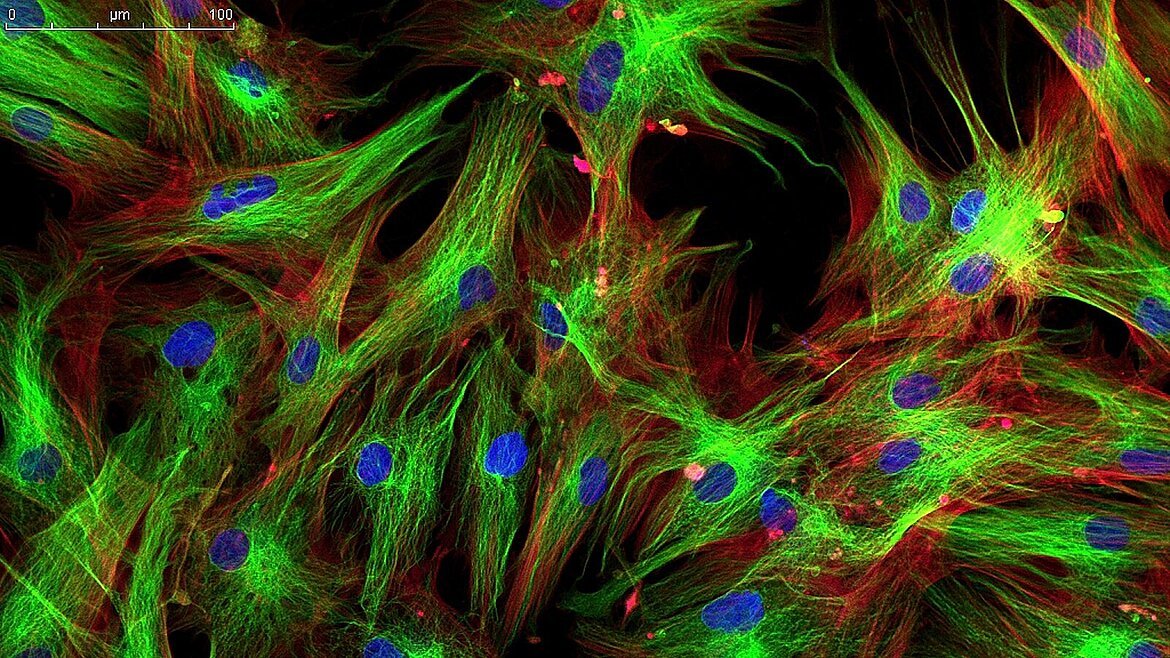
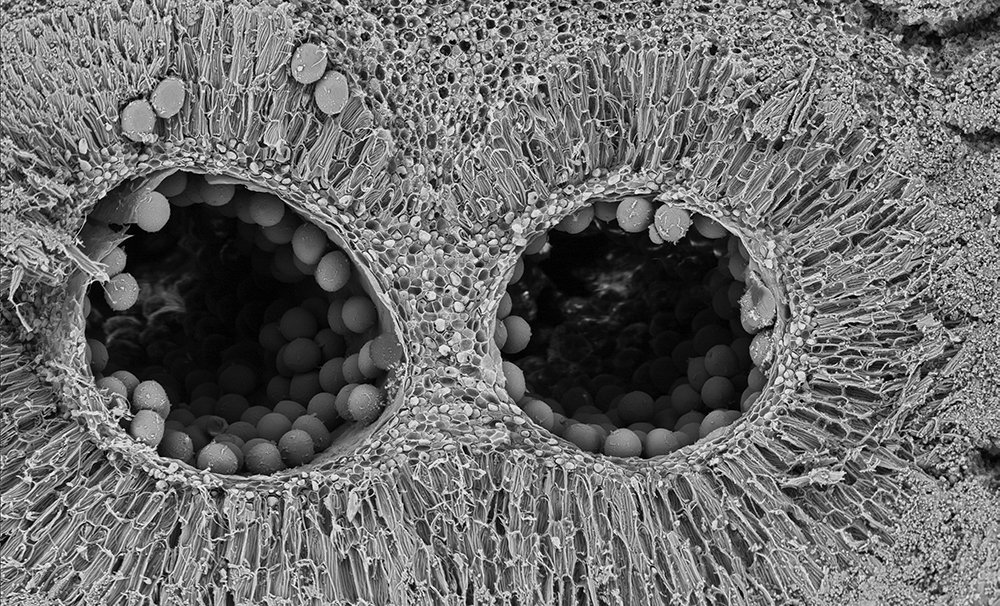
Photo of a fluorescent image of mobile skin cells (fibroplasts) from PI USA (left) and an electron microscopy image from the Dartmouth EM Lab (right). Curated by Andrea Mendez Aguirre (am3362@cornell.edu).
Aesthetic choices in a scientific context raise the question: when does enhancement become distortion? How much do the limitations of realistic rendering shape our understanding of the world? Consider again the Sun. It is nearly impossible to build a model of the solar system that accurately portrays scale and spatial relationships, and yet the model we all assembled in grade school was foundational in shaping how we picture the Sun's size.
Every image we see and every model we study is built from conscious choices about which aspects of reality to sacrifice in order to make something else more clearly visible. To me, this is a remarkable realization about where art and science intersect. Just as a painting can carry political, cultural, or emotional meaning by guiding a viewer's experience, a scientific image can completely reshape how we perceive the world. This is not a flaw in science, nor a reason for distrust, but a reminder of the limits and possibilities of representation. Scientific images do not simply show us reality; they help us imagine and interpret it. And in doing so, they reveal the extraordinary creativity with which we seek to understand our world.
Andrea Mendez Aguirre '28 is in the College of Agriculture and Life Sciences. She can be reached at am3362@cornell.edu.