Written by Sophia Gerrans
Edited by Rathusha Nimalan
In May 2025, the Trump administration issued Executive Order 14303, “Restoring Gold Standard Science.” The order accused prior administrations of politicizing science and using research to mislead the public. The order places oversight of alleged scientific integrity violations into the hands of senior political appointees – stripping even more power and oversight from federal scientific institutions.
Since last May, the administration has wielded executive orders and funding cuts in a series of attacks that amount to an all-but-official war on science. And standing in the middle of this battlefield, as the government argues over their life's work: the scientists.
Scientists' involvement in politics is a deeply polarizing issue. On average, only 51% of Americans believe scientists should play an active political role. But the division is even starker along party lines, with 67% of Democrats preferring scientists be active to Republicans’ 35%.
But as Nature Journal’s editorial board argued last June, scientific research and its funding cannot be divorced from politics. Scientists have found themselves at a crossroads, and “in the face of anti-science politics, silence is not without cost”
When scientists are absent from public discourse, it creates an authority vacuum in which political figures, like Robert Kennedy Jr., profit. During the 2020 pandemic, RFK Jr. was one of the “disinformation dozen,” a cohort of bad actors responsible for over 65% of online COVID-19 misinformation. Now, as Human Health and Services secretary, he's rolling back long-standing childhood vaccine mandates and advancing medical conspiracy theories.
It’s not just RFK Jr.; regardless of whether researchers take a stance, the very system of American science is being dismantled. By January 2026, the Trump administration had terminated 25,000 federal scientists working on projects spanning environmental pollution to cancer research. Simultaneously, the administration has cut at least 50 NIH fellowship and training programs aimed at developing the next generation of scientists. And these types of institutional erasures fly completely under the public’s radar. A Milbank Quarterly November 2025 study finds 40% of Americans couldn’t name a single consequence of Trump’s funding cuts and systematic firings. It’s clear that scientists can no longer afford the luxury of passivity.
Science advocacy takes many forms, but the common thread is a passion for science and the ability to communicate it effectively. While scientists might earn an A+ in the first category, the Union of Concerned Scientists points out that many struggle with advocacy because they lack the skills to effectively communicate their work.
Research itself is inaccessible to everyday audiences. Scientists publish their work in for-profit journals; as a result, almost 70% of all published research is locked behind a paywall. This is a non-issue for other scientists who usually have access to institutional subscriptions, but it creates a barrier for non-scientists.
But even accessible research papers aren’t necessarily written for a non-scientific audience. So the next best resource would be the scientists themselves… if they could effectively communicate their work. Scientists often struggle to translate their research for the public, relying on overly complicated jargon and overlooking the bigger-picture implications that make their work compelling.
At the same time, scientists struggle to navigate the intersection of science and politics. In a November 2024 study published in Science, 73% of researchers reported not understanding how public policy works. Conversely, 80% of respondents believed policymakers lacked a sufficient understanding of science.
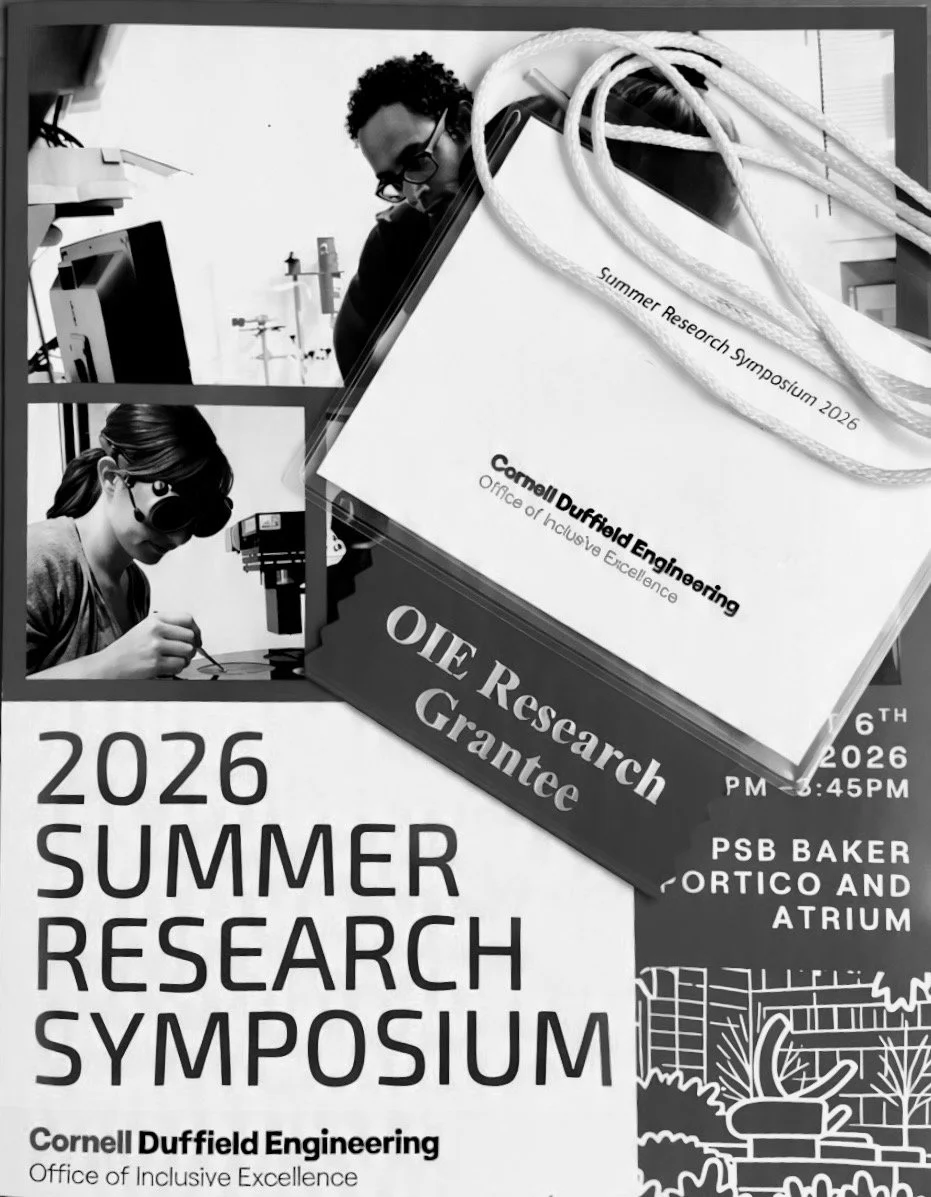
So how can scientists cross this communication canyon? For starters, learning to communicate their research to any audience. Organizations like COMPASS offer resources to help scientists translate research into a clear story. And you don't need a PhD to start practicing. Practice explaining your research to a friend outside your major or write for a student publication – such as CURM!
But scientists also need to learn how to navigate the political world. Organizations like the Union of Concerned Scientists offer free advocacy workshops covering everything from writing letters to the editor to communicating with members of Congress. And there's no need to wait until graduation to get involved. Students can contact their representatives about science-related legislation or submit public comments on proposed federal policies. After all, you don't need to be an established scientist to start advocating for science
Sophia Gerrans ’27 is in the College of Agriculture and Life Sciences. She can be reached at sg2388@cornell.edu.