Why Does Tarot Feel So Accurate? The Science Behind The Tower.
Written by Cristo Perea
Edited by Gabby Coleman
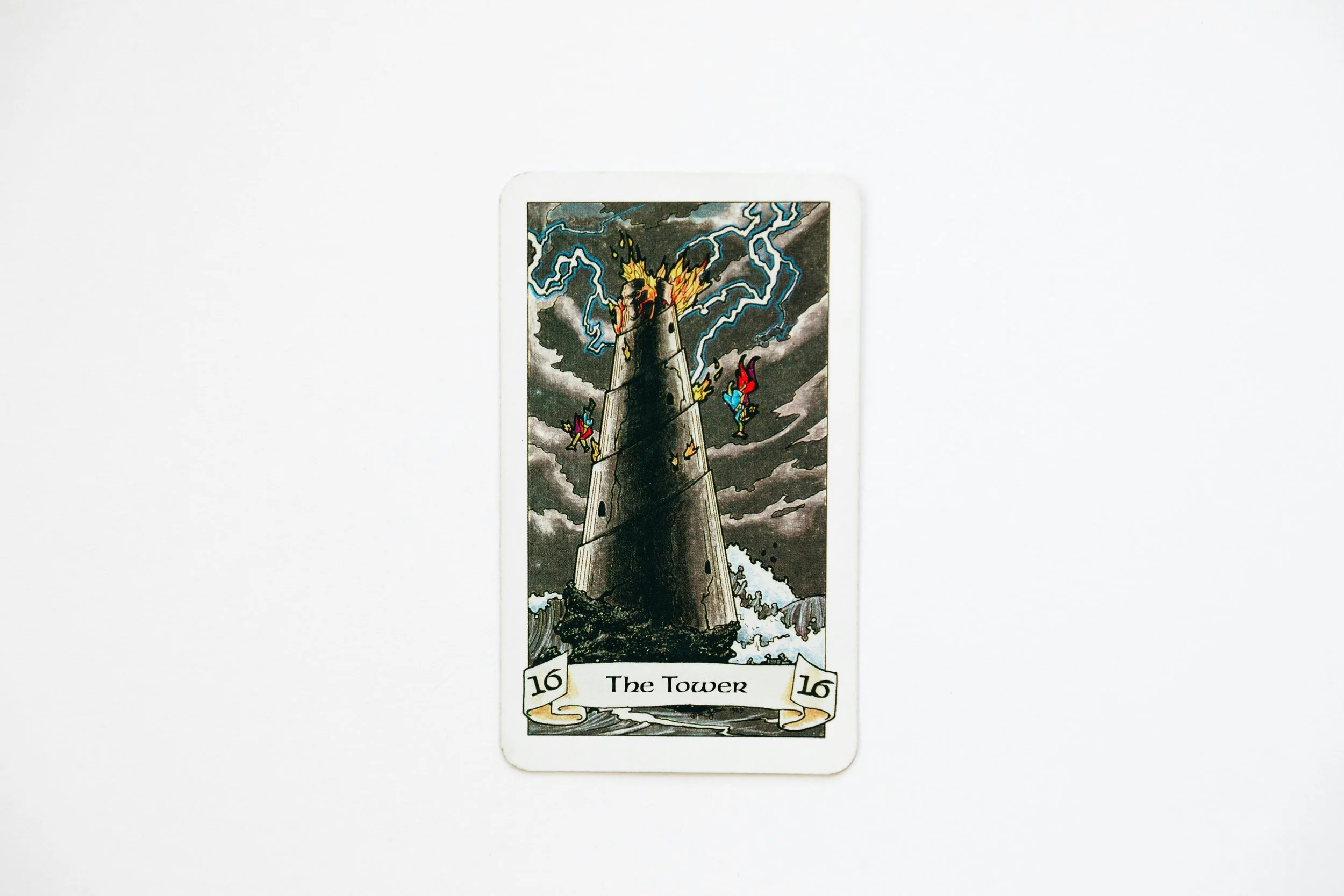
The Tower from the Rider-Waite-Smith Tarot Deck
Picture this; a psychic tells you to shuffle a deck of tarot cards without saying anything about what has been bothering you. You pull The Tower: a huge building, struck by lightning, flames engulfing it while people fall from its unstable structure.
The story it tells? Sudden change, disruption, or the collapse of something that once seemed stable. At first, you might think, “Wow! That’s exactly what I’m going through.”
But on second thought, "How can a random card possibly know that?”.
The short answer is that it doesn’t. There is no solid scientific evidence that proves tarot cards can predict the future. However, the sensation of choosing a tarot card that's strangely accurate can be explained by something just as interesting: OUR BRAIN!
The way our brains create meaning from ambiguous information is truly a mystery, and a puzzle needs to be solved.
The first piece of it though, is emotion. The Tower is not a subtle image. The fire, falling people, and lightning are emotionally heavy symbols.
Research on emotion and attention has constantly found that emotionally heavy images capture and hold our attention better than neutral, boring images.
That means, when you see The Tower while already worried about a breakup, an exam, or a major life decision, your brain won't process it as another picture; instead, the imagery grabs your attention, and suddenly you are searching your own life for connections.
And, for one, humans are really good at finding connections.
Our brains look for patterns because recognizing relationships between events helps us understand life [1]. However, sometimes, we find connections even when the information is ambiguous. Tarot provides an almost perfect environment for this because its symbols are open to interpretation. The Tower could represent anything, a career change, an argument, or simply fear of losing control.
The card does not tell you which one it is. Your brain does.
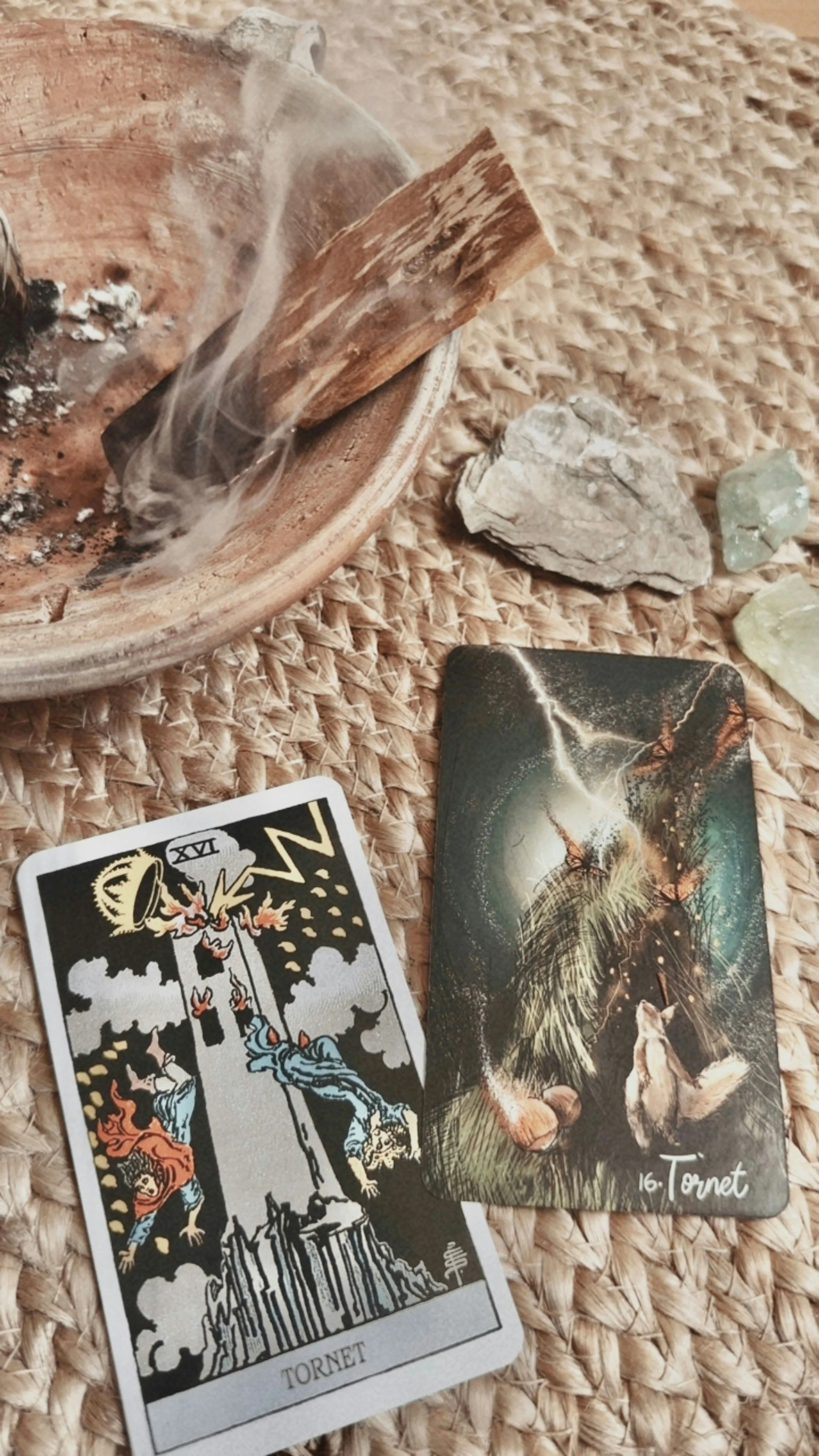
"Tornet", Card XVI
This is where the Barnum, or Forer, effect — which states that people process the same image differently – comes into play [source 3]. In a famous 1949 experiment, psychologist Bertram Forer gave students identical personality descriptions but presented them as individual assessments. The students generally judged the descriptions to be surprisingly accurate, even though they had all received essentially the same information [source 3].
Tarot works similarly. A card has enough general symbolism that people can connect it to completely different experiences. The Tower might represent a failing friendship with someone or a professional setback for another. The interpretation of it feels personal because it's built off personal details.
Then comes confirmation bias. Renowned Psychologist Raymond Nickerson's review of the research states confirmation bias as the tendency to seek or interpret evidence in ways that favor existing beliefs or expectations. [source 2]
For example, if you draw The Tower and say, “this’ll represent a major change coming in my life,” over the next week, you’ll notice every argument, and stressful event that seems to support that statement while other events will be deemed irrelevant.
Are you A FOOL for believing in Tarot? No. In fact, a tarot reading can serve as a prompt for reflection. The card gives you an unfamiliar image, and you respond by asking yourself questions:
What in my life feels unstable?
What am I afraid of losing?
What change have I been avoiding?
It won’t show you the future, but it’ll encourage you to reflect on thoughts you were already having.
Science explains why The Tower feels like it is speaking directly to you without proving that the card predicted anything.
Its emotional imagery can capture attention. Then its ambiguity gives the brain room to construct connections. Later, the Barnum effect can make broad interpretations feel personal. All to end with confirmation bias, strengthening the connection afterward.
Again, The Tower won't tell you what will happen next. But if looking at it makes you realize that something in your life needs to change, go for it. Just know that realization came from somewhere else, your BRAIN!
David Kim-Shoemaker ’(29) is in the College of Agriculture and Life Sciences. He can be reached at djk323@cornell.edu.
Sources:
https://link.springer.com/article/10.1007/s00426-023-01852-6
https://pages.ucsd.edu/~mckenzie/nickersonConfirmationBias.pdf
"Tornet", or The Tower in Swedish, is the 16th major card (Card XVI) in the standard tarot deck. Credit to Lynn via Unsplash and is under the Unsplash license. Here is the direct link: https://unsplash.com/photos/tarot-cards-with-burning-palo-santo-and-crystals-yvL-cGSk_r8
Photo is from Unsplash and is covered by Unsplash License (free use of images). Credit to Viva Luna Studios and here's direct link: https://unsplash.com/photos/tarot-card-depicting-the-tower-struck-by-lightning-mHELyPasVOA