Painting Space Through Image Processing
Written By: Heidi Yoo
Edited By: Raghav Tewari
If one took a trip into outer space for some intergalactic sightseeing, the sights available to human eyes would not quite match the ones posted across NASA’s website. Most of the nebulae, galaxies, and star clusters splashed across the ultra-saturated, glitter-studded images we see have been translated to colors perceivable to the human eye.
Humans can visually process only a very small fraction of the entire electromagnetic spectrum. The wavelengths we do not see, though, contain valuable information. Infrared light dominates thermal radiation, and collecting data in such a frequency can help astronomers detect celestial objects faint in the visible range, but which still emit heat; ultraviolet light, emitted by relatively more extreme celestial bodies and events, can also reveal planets’ atmospheric composition [1]. Practically as well, certain radiation frequences allow astronomers to bypass specific observational challenges: longer wavelengths better penetrate gas and dust in space, whereas light in shorter wavelengths is more easily scattered by particles and thus more difficult to observe. Astronomers use specialized telescopes that observe different wavelength ranges: among the most famous are the Hubble Space Telescope (near-infrared to ultraviolet) [2] and James Webb Space Telescope, or JWST (mid-infrared to visible red) [3].
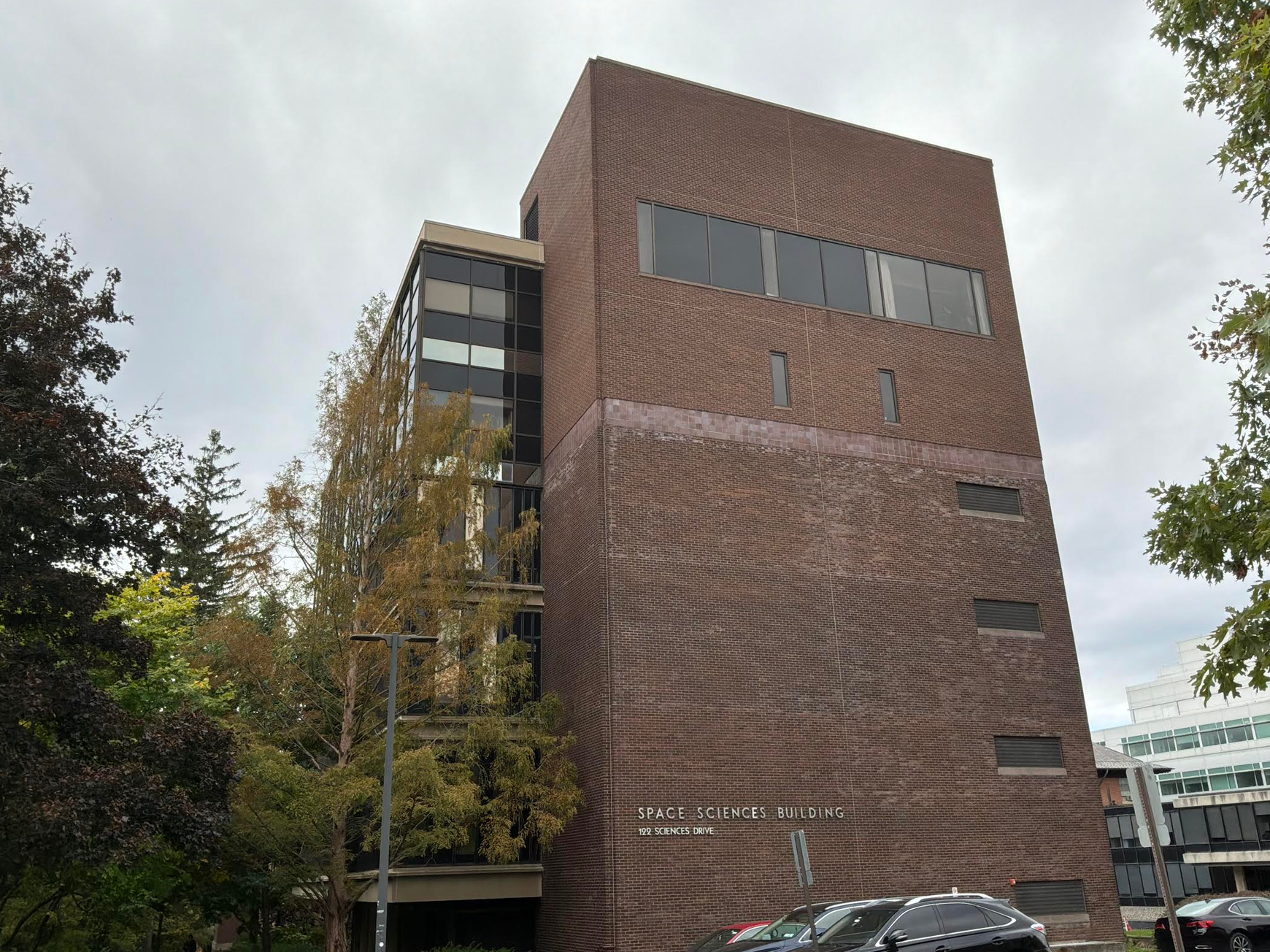
Image of the Space Sciences Building.
The data that telescopes such as Hubble and JWST collect, however, is not in the form of a color image like a traditional camera. Traditional cameras have color film that tracks three colors: red, green and blue. Each layer of the film is sensitive to one of these three, and the color is inherent to what the camera captures [4]. In astronomical space imaging, though, what we see online are “false color images” — the work of astronomers who have gone through the originally grayscale data. Telescopes receive data in black and white; photons collide with a detector calibrated to a certain range of wavelengths, and the collision and its brightness are recorded [5]. However, since many of these wavelengths are invisible to humans, astronomers add color that we can perceive back into the image using color maps. These translate certain information yielded by that wavelength range — commonly temperature, energy, or chemical composition — to a color in the visible light range [6]. For example, an astronomer might assign blue to oxygen traces and red to hydrogen; alternatively, if measuring energy, red might be assigned to lower energy and blue to higher. By translating each of the photon collisions’ detected brightness and intensity to a representative visual-range color, astronomers can simultaneously impart both beautifully colored “photographs” and catalogue astronomical information.
In reality, though, one set of data is typically not sufficient to produce the complexity and resolution of the most impressive images. Most of what we see are layers of data across different wavelengths. Each layer, or frame, is precisely superimposed on each other; the colors assigned to each layer work in tandem to create the depth and intensity we associate with some of the most otherworldly astronomical phenomena [5].
Here at Cornell, the Center for Astrophysics and Planetary Science runs the Spacecraft Planetary Imaging Facility (SPIF), a hub for astronomical data and outreach alike. Their programs accommodate a variety of experience levels, from walk-in visits and tours to workshops on data mapping and management [7]. Although traditional photography and space image processing have their differences, it is remarkably accessible to begin dabbling in both. Vast databases, such as the Mikulski Archive for Space Telescopes (MAST), offer telescope data free to the public [8]. You do not need to be an astronomer to create your own colorful intergalactic images; in a sense, after all, humans are the ones who painted space with the colors we know it for now.
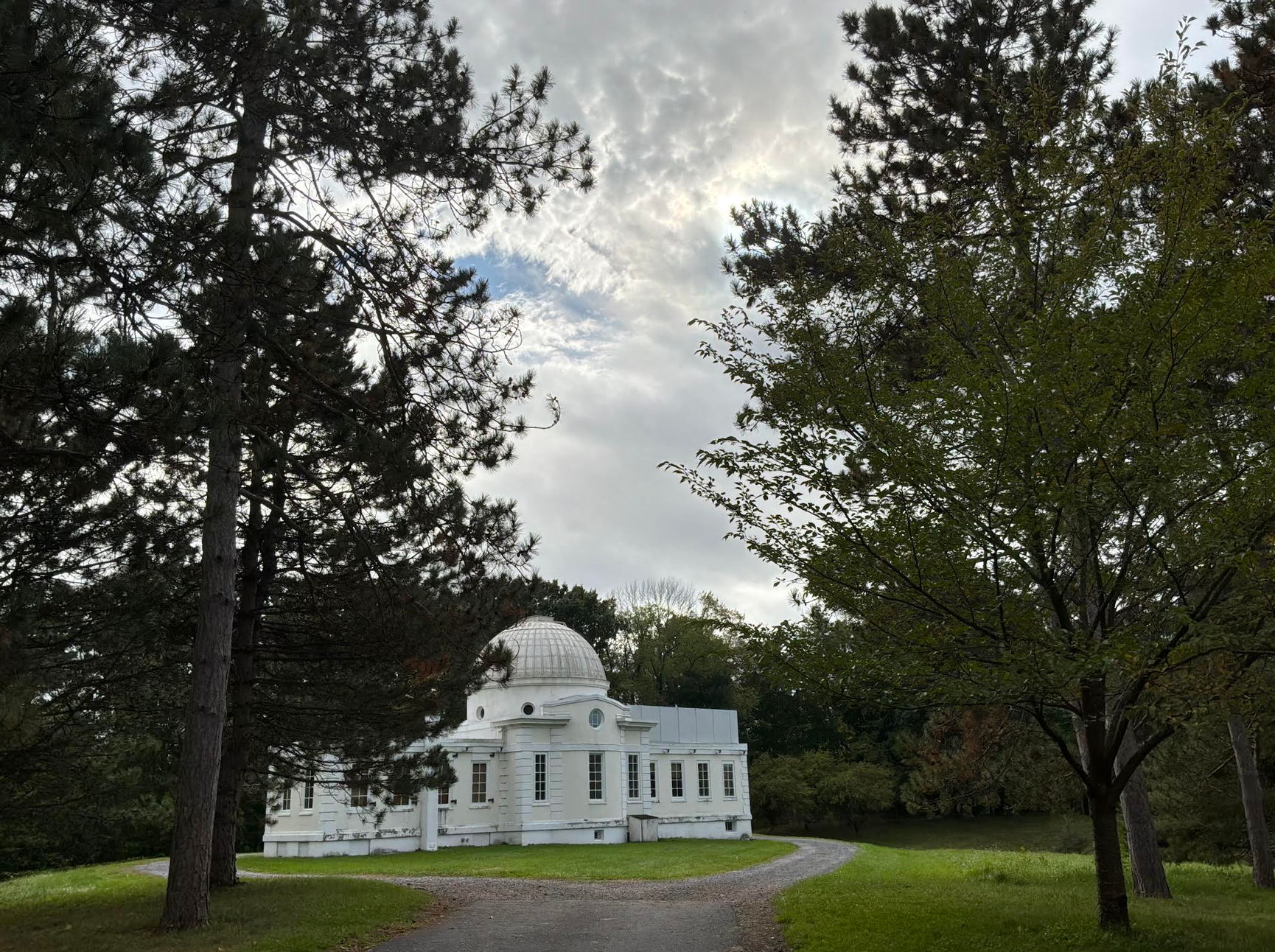
Image of the Fuertes Observatory
Heidi Yoo in the College of Arts and Science. She can be reached at hy695@cornell.edu.