Beyond the Canvas: Living Art is Only Growing
Written by Samantha Arturo
Edited by Aaryan Pugazendhi
Think about some of the world’s most celebrated paintings. The Mona Lisa. Starry Night. Monet’s Water Lilies. What do they have in common? They all rely on pigmented oil-based paints, traditionally made with ground minerals and metals. Although art materials have evolved since then, being phased out for more common synthetic materials and dyes, these practices have been celebrated for hundreds of years, with their praise not subsiding anytime soon. These art pieces are renowned for their artistry, craft, and traditional painting techniques, yet it is these same fundamentals that are being challenged by contemporary artists and researchers, who are becoming increasingly influenced by science and technology.
Traditional oil paint, while chemically active when wet, is nothing more than an immobile solid once dry. Newer approaches, using bioengineered materials, are looking to expand art beyond the canvas, superseding viewable art for art that individuals can directly interact with using biological processes. For example, researchers are beginning to develop pigments in new ways using bioengineered bacteria and algae to produce color naturally by programming color production based on responses to light or other signals, instead of relying on synthetic dyes. Others are looking towards being more environmentally conscious by replacing petroleum-based paint binders with protein-based binders, which are biodegradable, renewable, and lower in Volatile organic compounds (VOCs). VOCs cause health issues like eye irritation and headaches, but can also cause greater long-term effects like cancer. Thus, reducing exposure to and the production of VOCs is nothing but beneficial, not only individually but also environmentally.
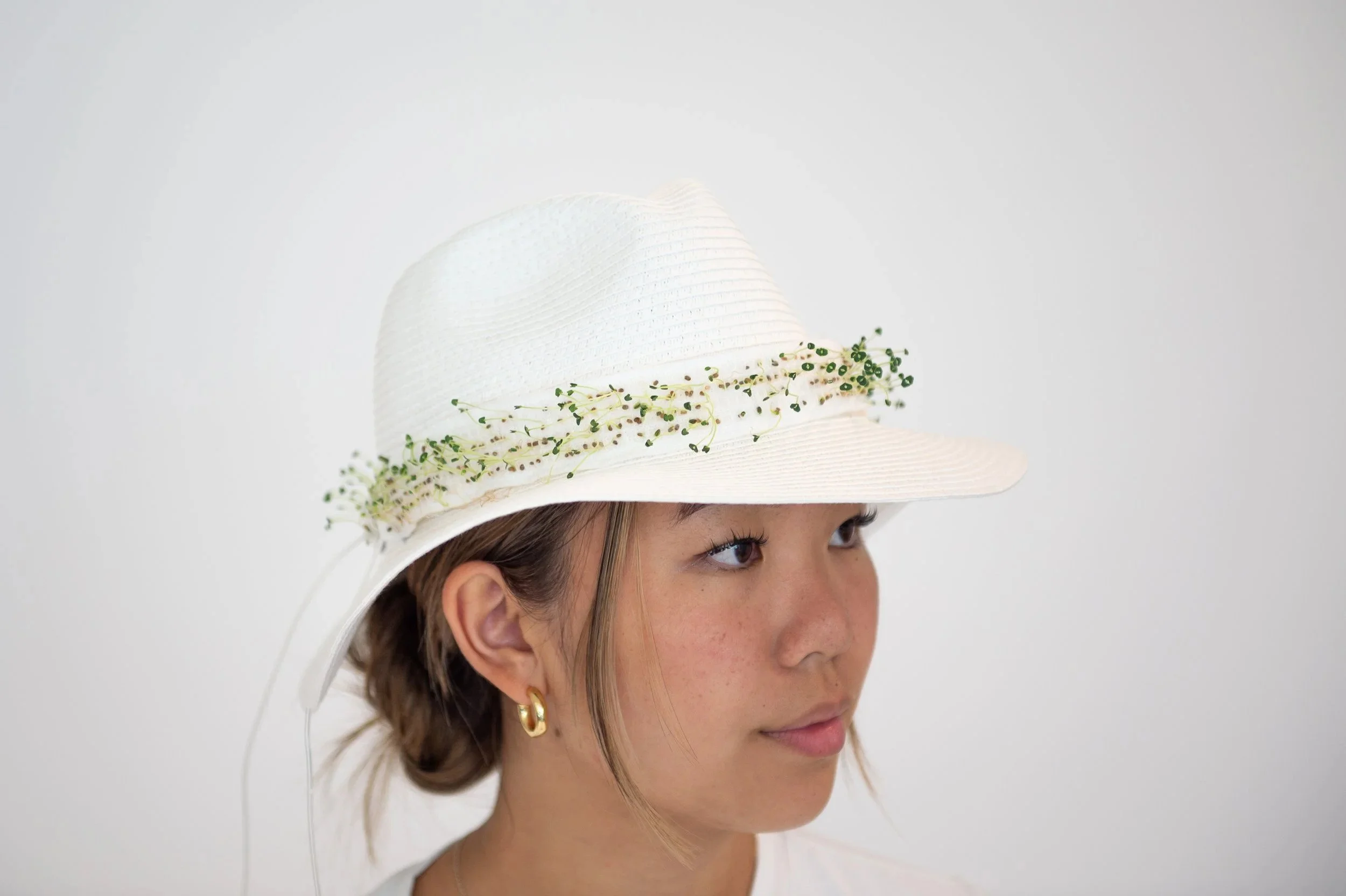
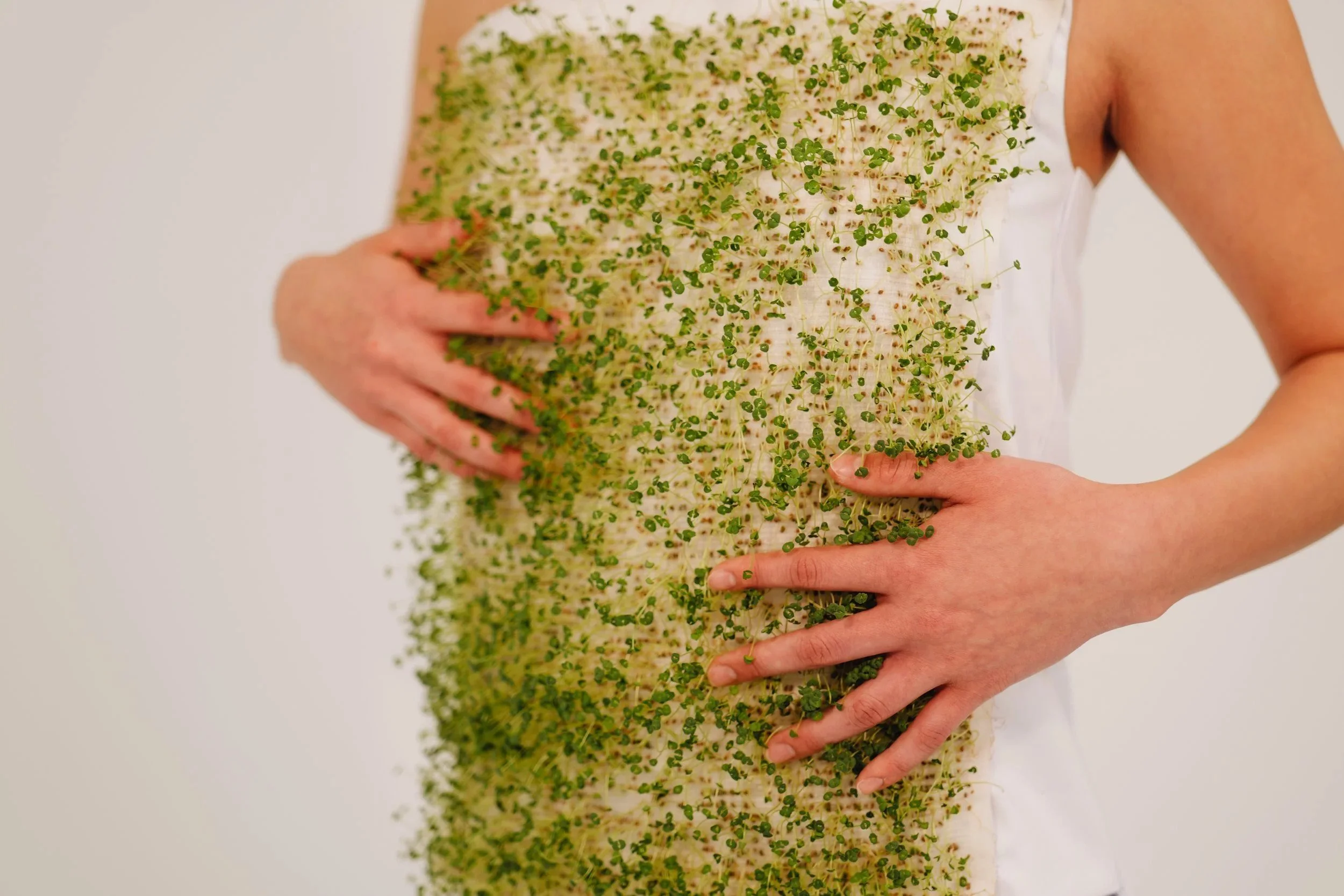
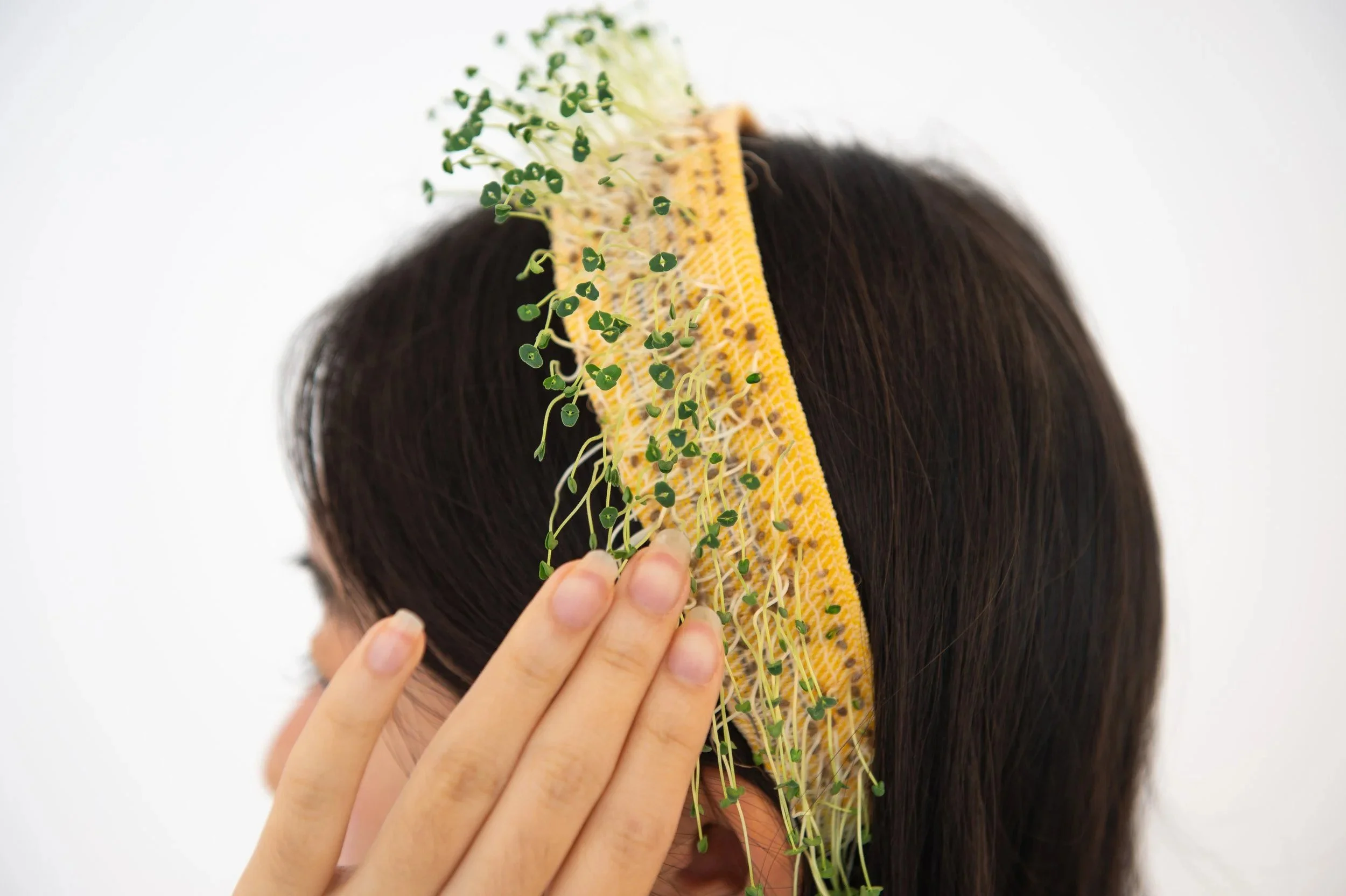
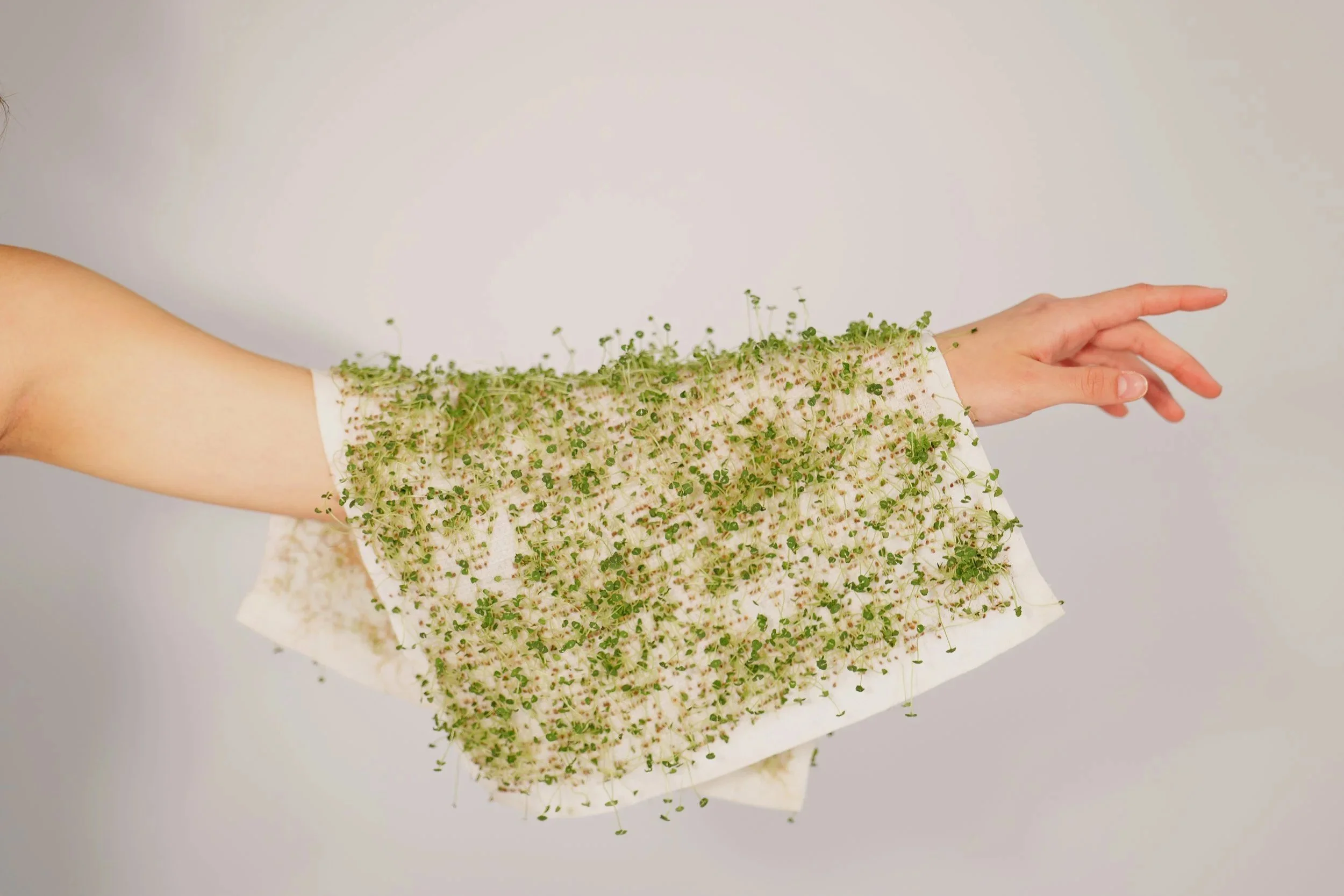
Photos taken by Margaret Tsai via the Living Loom Hybrid Body Lab. Curated by EllaRose Sherman (eks92@cornell.edu).
At the crux of these advances in art, technology, biology, and sustainability, the Hybrid Body Lab at Cornell University encapsulates the future of modern art and innovation. Founded by Associate Professor Cindy Hsin-Liu Kao, the Hybrid Body Lab is focused on integrating “cultural and social perspectives into design of on-body interfaces” [1]. For example, LivingLoom is one of the many projects the Hybrid Body Lab has developed in pursuit of innovating art. The LivingLoom project investigates human-plant symbiosis by making plants into wearable textiles [2]. A commentary on how plants are often commodities for human needs by being grown, harvested, and spun into textiles, LivingLoom looks to value and honor plants as living organisms while still making them wearable for humans. LivingLoom is one of the many projects looking to reinvent how humans interact with their environment, while expanding art’s boundaries.
Simultaneously, Hsin-Liu Kao strives to make a difference in the art and design communities. With work being featured at the Pompidou Centre in Paris, the Boston Museum of Fine Art, Ars Electronica in Linz, Austria, the Seattle Museum of Pop Culture, and on the New York Fashion Week runway [1], Hsin-Liu Kao’s designs have flourished and been revealed to the masses. Additionally, Hsin-Liu Kao includes tutorials from the Hybrid Body Lab on the lab’s website, allowing anyone to access and experiment with these technologies while promoting the circulation of new ideas stemming from these basics.
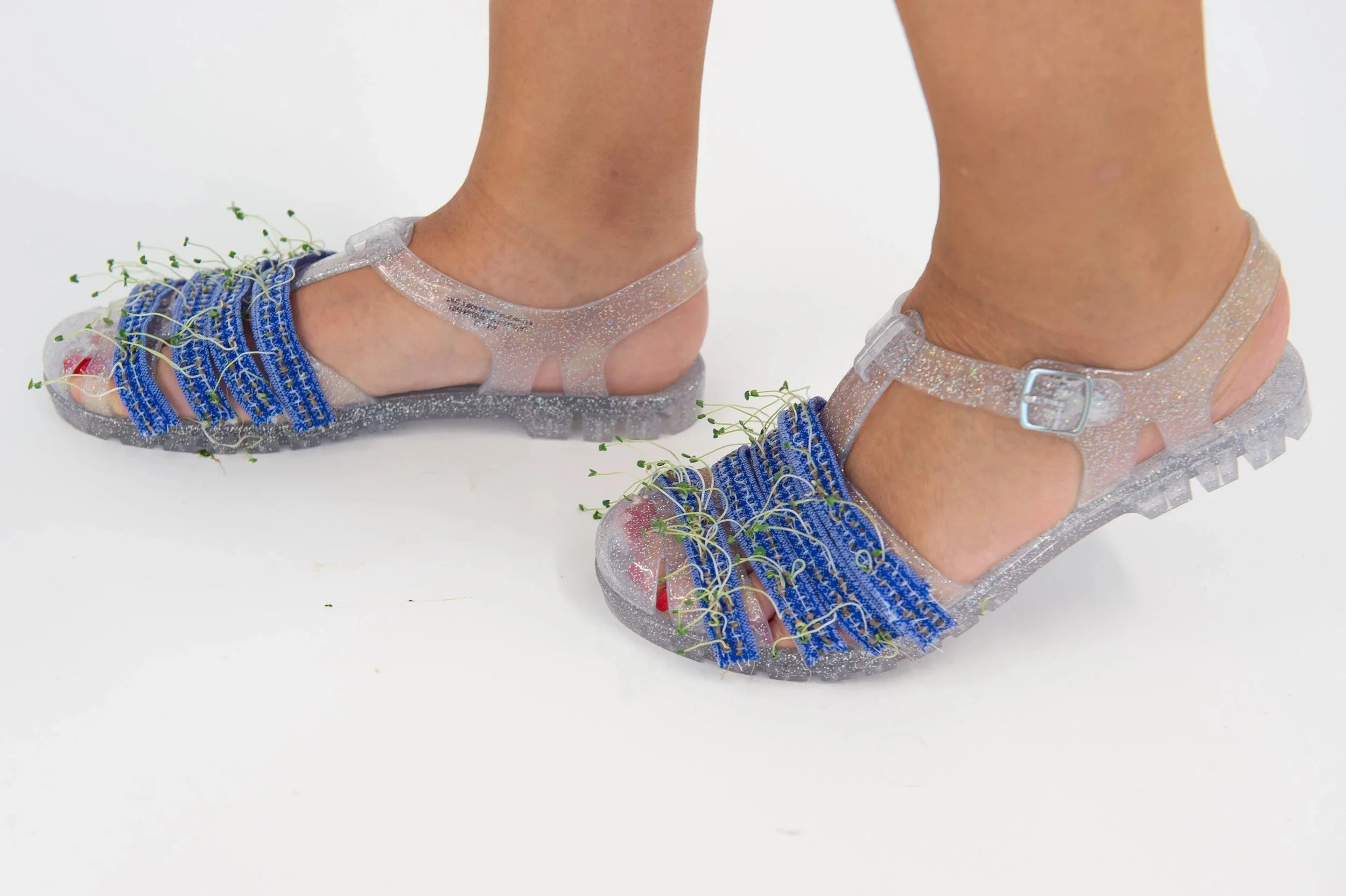
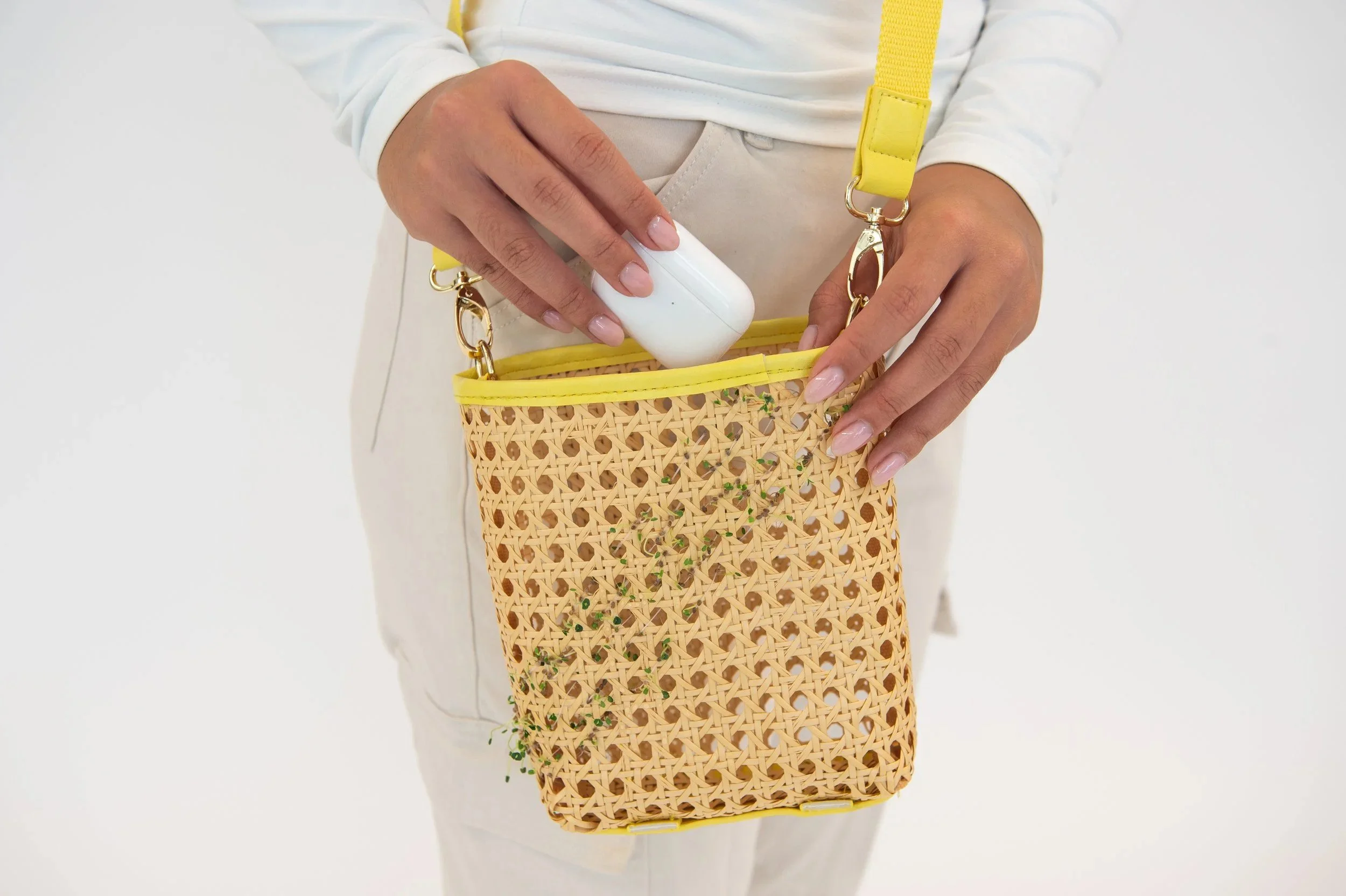
Photos taken by Margaret Tsai via the Living Loom Hybrid Body Lab. Curated by EllaRose Sherman (eks92@cornell.edu).
The Hybrid Body Lab is just one small step towards the future of art. While canvases and material production have changed to become more environmentally conscious, it is exciting to see how much more this field will develop in accordance with new technologies. What does the future hold? How will interactive art compare to passive art? Further, how will the appreciation of previous art forms change with the creation of new methods of art?
Samantha Arturo '29 is a Biology & Society major in the College of Arts & Sciences. She can be reached at sma298@cornell.edu.